
As Shenzhen Prepares for APEC 2026, Smart Parking Offers a Ground-Level View of Urban Infrastructure
As Shenzhen prepares for APEC 2026, explore FUJICA System’s parking project references and learn about license plate recognition, parking barrier gates, and smart parking management.
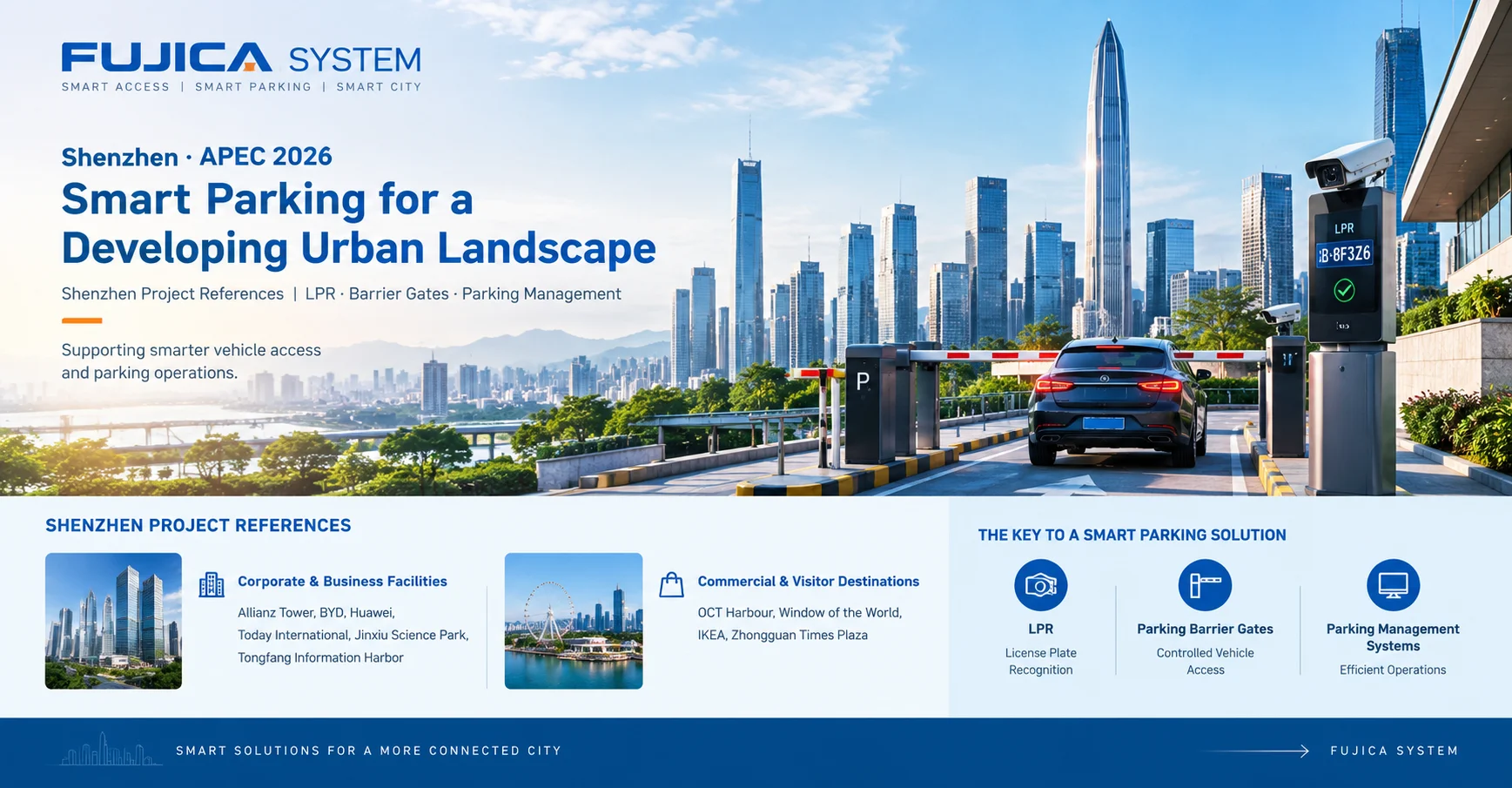
In November 2026, Shenzhen will welcome leaders and business representatives from across the Asia-Pacific region for APEC China 2026. The city is preparing to host the 33rd APEC Economic Leaders’ Meeting on November 18–19, placing its urban development, innovation, and international connectivity in the global spotlight.
But a city’s ability to support business, commerce, tourism, and major events is not defined by its skyline alone. It also depends on the everyday infrastructure that keeps people and vehicles moving—from transport networks and commercial facilities to the parking systems serving office buildings, retail destinations, and business campuses.
For Shenzhen, smart parking is one practical part of this broader urban infrastructure story.
With project references across Shenzhen, including Allianz Tower, BYD, Huawei, OCT Harbour, and Window of the World, FUJICA System brings experience in parking and vehicle access solutions across different types of facilities. These projects provide a starting point for examining how license plate recognition, parking barrier gates, and parking management systems fit into modern parking operations.
Shenzhen APEC 2026: Looking Beyond the Event
APEC 2026 highlights Shenzhen’s role as a city shaped by international business, technological innovation, and economic connectivity. The event also creates an opportunity to look beyond the meeting venues and consider the infrastructure that supports a city throughout the year.
Office buildings need to manage daily vehicle arrivals and departures. Commercial destinations must accommodate employees, customers, and visitors. Business parks and large facilities need parking arrangements that fit their site layouts and operational requirements.
These needs do not begin or end with a major international event. They are part of the daily work of facility managers, property operators, and parking system integrators.
A well-planned smart parking system can help organize vehicle entry and exit, support parking access management, and give operators a clearer way to manage parking activity. Its effectiveness, however, depends on more than a single piece of equipment. Recognition devices, barrier gates, control software, and site-specific configuration need to work together as a coordinated system.
This is where practical project experience matters.
A Look at FUJICA System’s Parking Project References in Shenzhen
Shenzhen brings together corporate facilities, commercial destinations, and visitor attractions within a highly developed urban environment. Parking requirements can vary considerably between these settings, making project context an important part of solution planning.
FUJICA System’s Shenzhen project references include the following locations.
Corporate Buildings and Business Facilities
- Allianz Tower
- BYD
- Huawei
- Today International
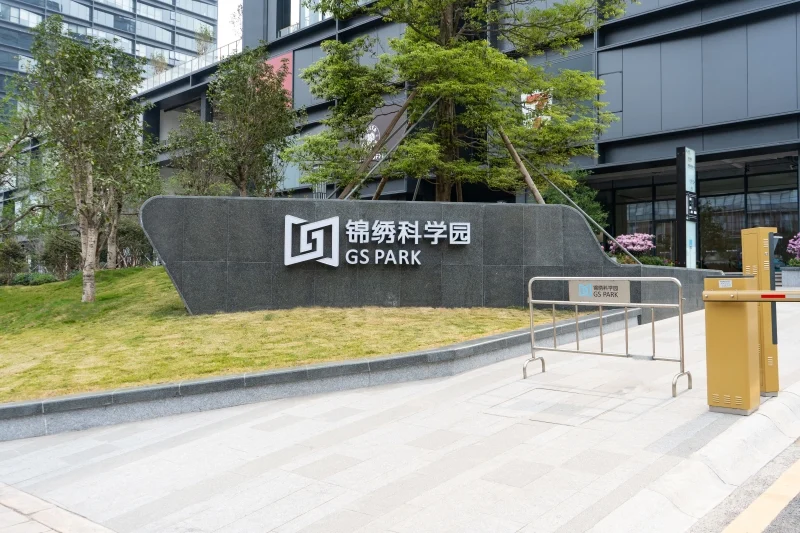
- Jinxiu Science Park
- Tongfang Information Harbor
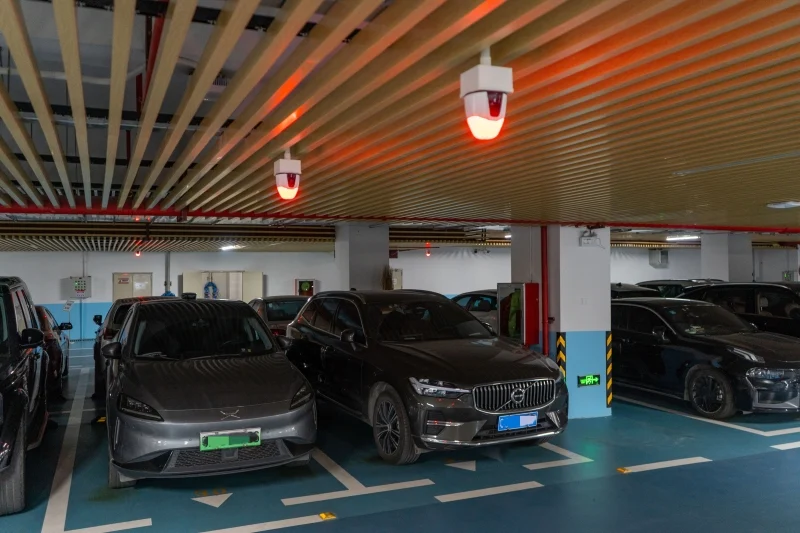
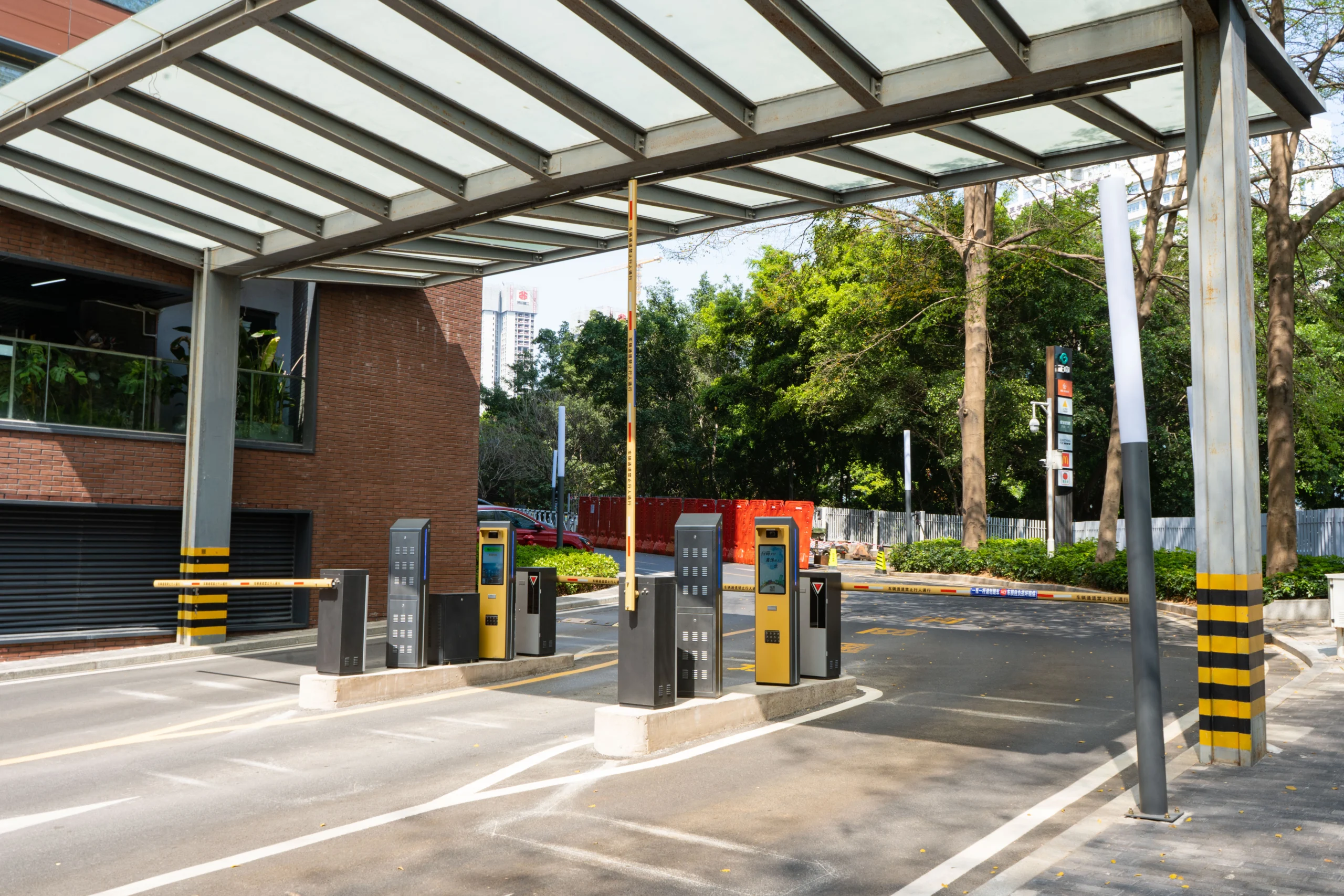
Corporate buildings and business facilities may need to accommodate a combination of employees, visitors, service vehicles, and other authorized users. Depending on the site, parking management may involve vehicle identification, entry authorization, barrier control, and centralized operational oversight.
The appropriate configuration depends on factors such as traffic patterns, lane layout, access rules, existing infrastructure, and the facility’s management procedures.
Commercial, Retail, and Visitor Destinations
- OCT Harbour
- Window of the World
- IKEA
- Zhongguan Times Plaza
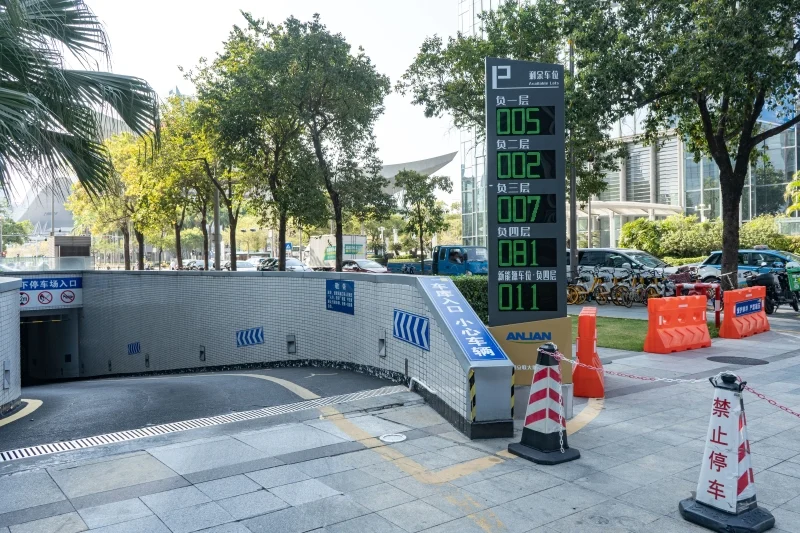
Commercial and visitor-oriented facilities may face different operational patterns, including changing arrival volumes, visitor parking, and peak periods associated with business hours or customer activity.
For these environments, parking equipment needs to be considered as part of the complete entry-and-exit process. Vehicle recognition, barrier operation, and management software should be selected and configured to suit the site’s actual requirements.
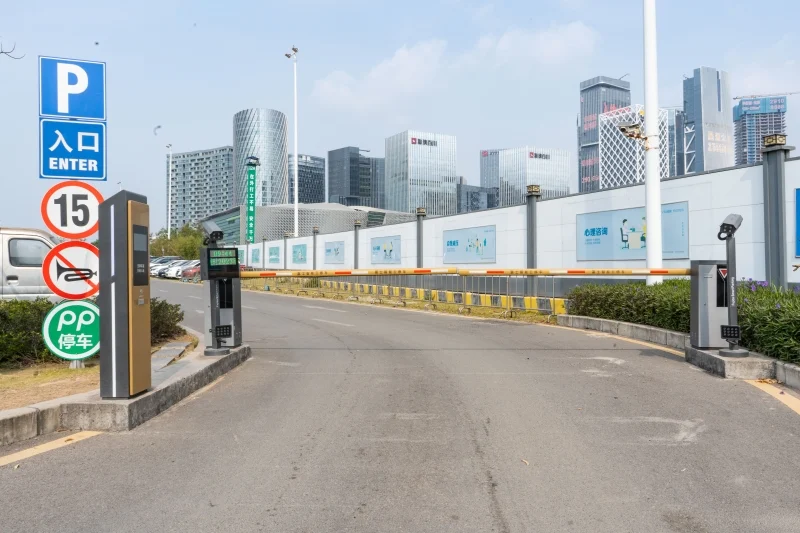

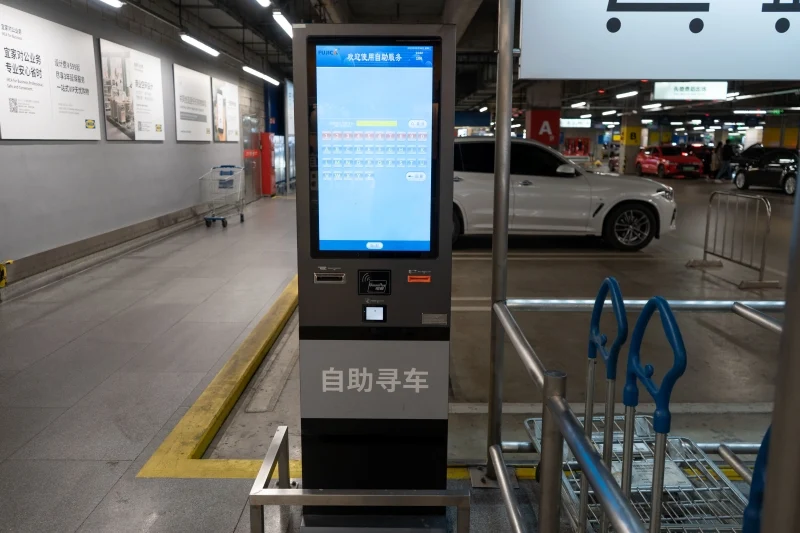
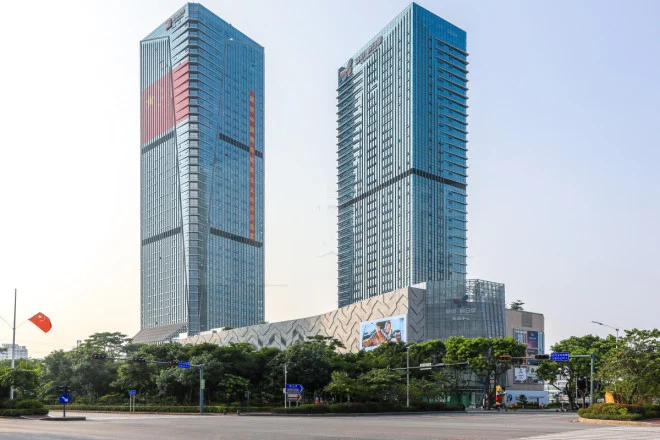
Together, these project references illustrate the range of facilities in which parking management solutions are relevant. They should not be taken to mean that every location uses the same equipment configuration or system architecture.
Three Core Elements of a Smart Parking System
For international buyers evaluating a smart parking system, it helps to understand how its main components work together.
1. License Plate Recognition
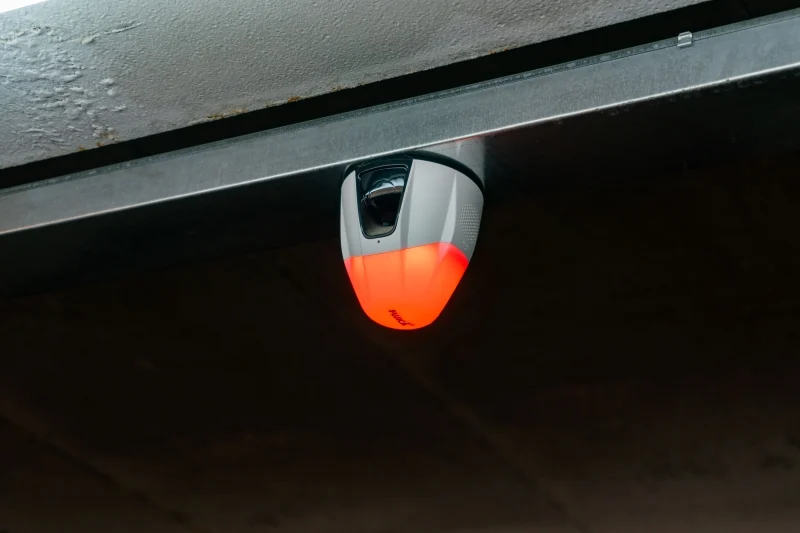
A license plate recognition system identifies vehicle registration plates at designated access points. Depending on the system configuration, recognition information can be used to support vehicle entry, parking records, and access rules.
When evaluating an LPR solution, buyers should consider local license plate formats, lighting conditions, camera placement, vehicle speed, network connectivity, and integration requirements. Performance should be assessed against the conditions of the intended site rather than assumed to be identical across every installation.
2. Parking Barrier Gates
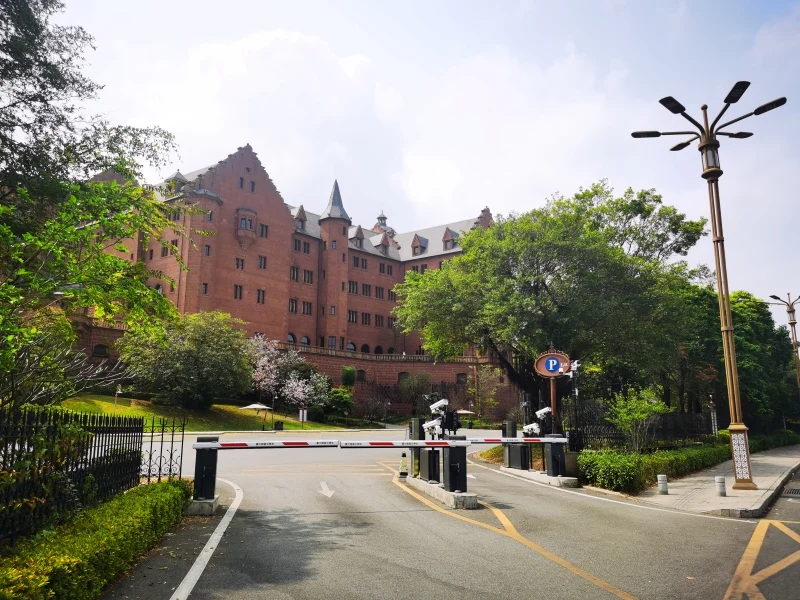
A parking barrier gate controls physical vehicle access at an entrance or exit. It is one part of the wider parking workflow, working alongside recognition equipment, control logic, and safety measures.
Selection considerations include lane width, expected operating frequency, installation conditions, traffic flow, and compatibility with the control system. Appropriate safety devices and site-specific installation planning are also essential.
3. Parking Management System
Parking management software brings relevant information and operating rules into a more organized workflow. Depending on its functions and integration scope, it may support vehicle records, access permissions, parking activity monitoring, and operational reporting.
For facilities with multiple lanes or more complex operating requirements, buyers should clarify how the software connects with recognition devices, barrier gates, existing management platforms, and other third-party systems.
The goal is not simply to install individual products. It is to build a parking solution that fits the site and can be managed over time.
What Shenzhen’s Parking Projects Can Teach International Buyers
Shenzhen’s development offers a useful context for discussing smart infrastructure, but there is no single parking configuration that suits every city or facility.
For overseas developers, property operators, distributors, and system integrators, several questions deserve attention before selecting equipment.
Start with the site, not the product list. Assess the number and layout of entry and exit lanes, vehicle flow, operating hours, and the types of users the facility needs to accommodate.
Check system compatibility. Confirm whether license plate recognition devices, barrier gates, controllers, and management software can communicate as required. Where third-party platforms are involved, establish the integration scope before deployment.
Account for local operating conditions. Climate, lighting, license plate formats, network infrastructure, and local operating practices can all affect system design and equipment selection.
Plan for long-term operation. Maintenance access, spare parts, technical support, software updates, and troubleshooting arrangements should be considered alongside initial equipment requirements.
Verify project-specific performance requirements. Recognition accuracy, throughput, and other operational targets should be defined and validated under the conditions of the actual project. Results from one site should not automatically be applied to another.
These considerations help buyers move from comparing individual products to evaluating a complete smart parking solution.
From Shenzhen Project Experience to Global Smart Parking Solutions
APEC 2026 gives the international community another reason to look at Shenzhen—not only as a meeting destination, but also as a city with experience in technology, business, and urban development.
For FUJICA System, its Shenzhen parking project references provide a practical foundation for conversations about vehicle access management in corporate, commercial, and visitor-oriented facilities.
Our parking solution portfolio includes license plate recognition, parking barrier gates, and parking management systems. The right combination depends on each project’s operational needs, site conditions, and integration requirements.
For overseas distributors, system integrators, developers, and project owners planning a new installation or upgrading an existing facility, the first step is to define the parking workflow and technical requirements clearly.
Looking for a smart parking solution for your next project?
Explore FUJICA System’s Smart Parking Management Solutions or contact our team to discuss your project requirements.