Openness Begins at Every Entrance: What APEC Week Means for the Infrastructure of Access
Speed gates in real lobbies, entrances adapted to local conditions and FORM E in practice: FUJICA SYSTEM's ground-level view ahead of APEC 2026 in Shenzhen.

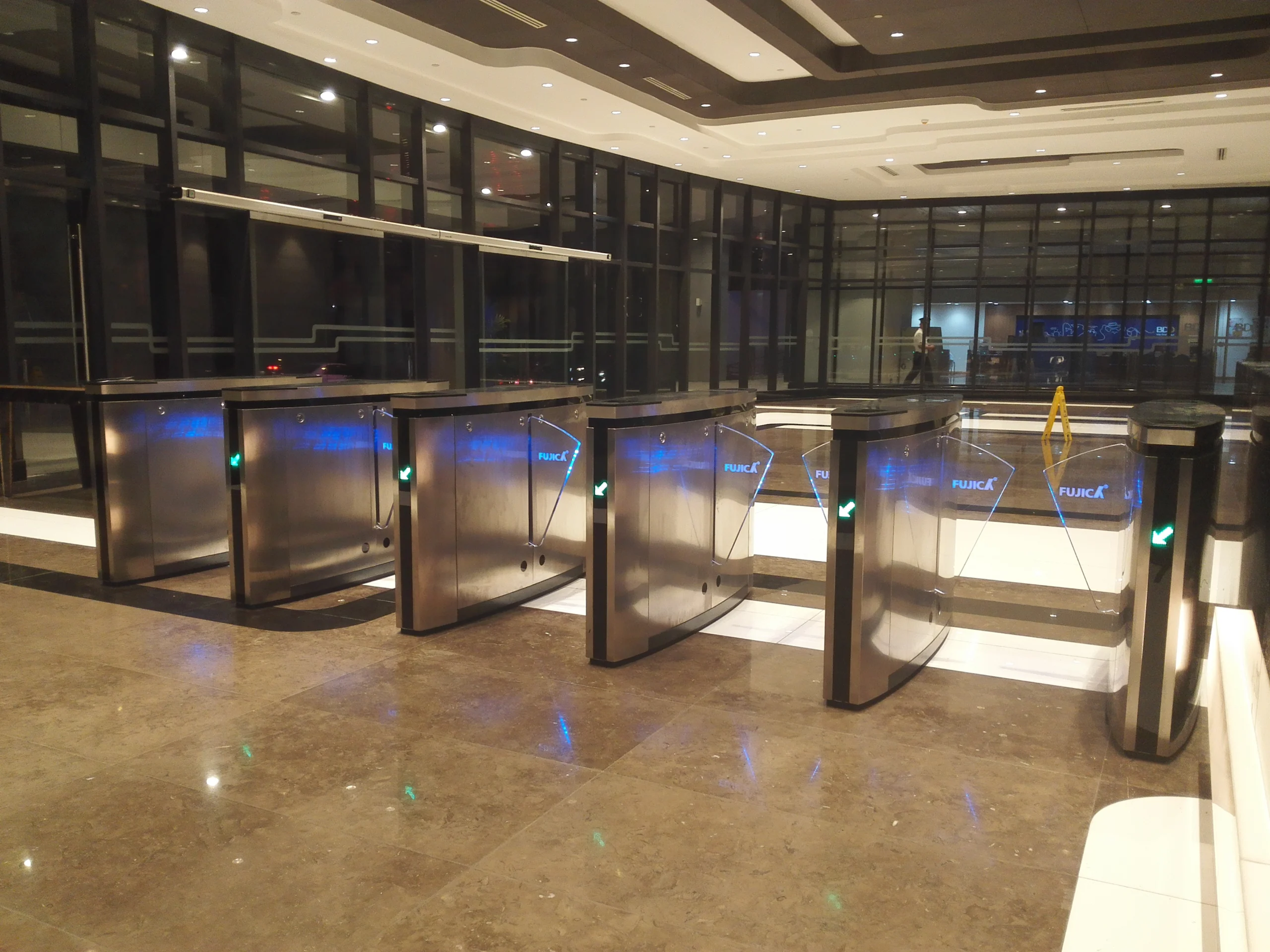
Real FUJICA speed gates at a building lobby entrance, with glass wings and green passage indicators.
Openness Begins at Every Entrance: What APEC Week Means for the Infrastructure of Access
0. APEC 2026 in Shenzhen: Where Openness Meets the Entrance
In the week leading up to the APEC Economic Leaders’ Meeting on 18–19 November, Shenzhen will be described largely in terms of rooms: meeting rooms, briefing rooms, the rooms in which statements are prepared. The 33rd APEC Economic Leaders’ Meeting is held in Shenzhen on 18–19 November 2026, the third time China has served as host, after Shanghai in 2001 and Beijing in 2014. The 2026 theme, Building an Asia-Pacific Community for Shared Prosperity, and its three priority areas are matters of public record. They are referenced here only as public background, and they are not the subject of this article.
Our subject is a different kind of space. As APEC Leaders’ Week approaches Shenzhen, the conversations about regional openness, about the movement of people and goods, and about the practical work of connectivity will take place indoors. The experience of that openness, for most people, will not. It will take place at a lobby gate, a campus corridor, a vehicle lane, a reception desk — at the moment a reader accepts a credential and a wing moves out of the way. A region can agree to lower a barrier in a document; a person meets the result as a fraction of a second in front of a piece of metal and glass.
We do not make policy. We make the thresholds through which openness is felt.
FUJICA SYSTEM CO., LTD. is a Shenzhen-based manufacturer of intelligent parking management and entrance control systems. This article is a company perspective on a regional economic conversation, ahead of the APEC meetings in Shenzhen; it is not an official one, and it does not speak for any APEC body. We are not affiliated with or endorsed by APEC. We do not take part in the meetings, and we make no claim to contribute to, support, or help shape their priorities or their outcomes. What follows is deliberately limited to what we can show: equipment installed in real buildings, a long-standing presence at regional industry exhibitions, and certificates of origin issued under specific free trade agreements. The dates, host city, theme and priority areas above are drawn from public information; everything else here is our own documentation, with its boundaries stated as plainly as the documents themselves.
1. The Physical Layer: Speed Gates, Flap Gates and Turnstiles in Real Buildings
Openness, at a regional level, is an abstraction. At a building, it is a very concrete piece of engineering: a lane, a reader, a wing that retracts, and a fraction of a second in which a person is either stopped or allowed through. Entrances are the most physical interface of human movement. A corridor that absorbs a morning peak without a queue, a lobby that separates staff, residents and visitors without a manned desk, a car park that registers a plate and lifts a barrier without a ticket — these are the points at which a policy word becomes a daily experience. They are also, in our line of work, the only points we are entitled to describe with any confidence.
Our product scope sits entirely at that interface. It includes intelligent parking management built on ANPR/LPR vehicle identification for unattended entry and exit; pedestrian speed gates, flap gates, swing gates and tripod turnstiles; vehicle barrier gates and lane control equipment; and integrated access control systems that tie readers, credentials and management software into a single installation. None of these categories is unusual in itself. What is worth describing is how they appear once they are fixed into a real floor, aligned with a real wall, and used by people who are late for something.
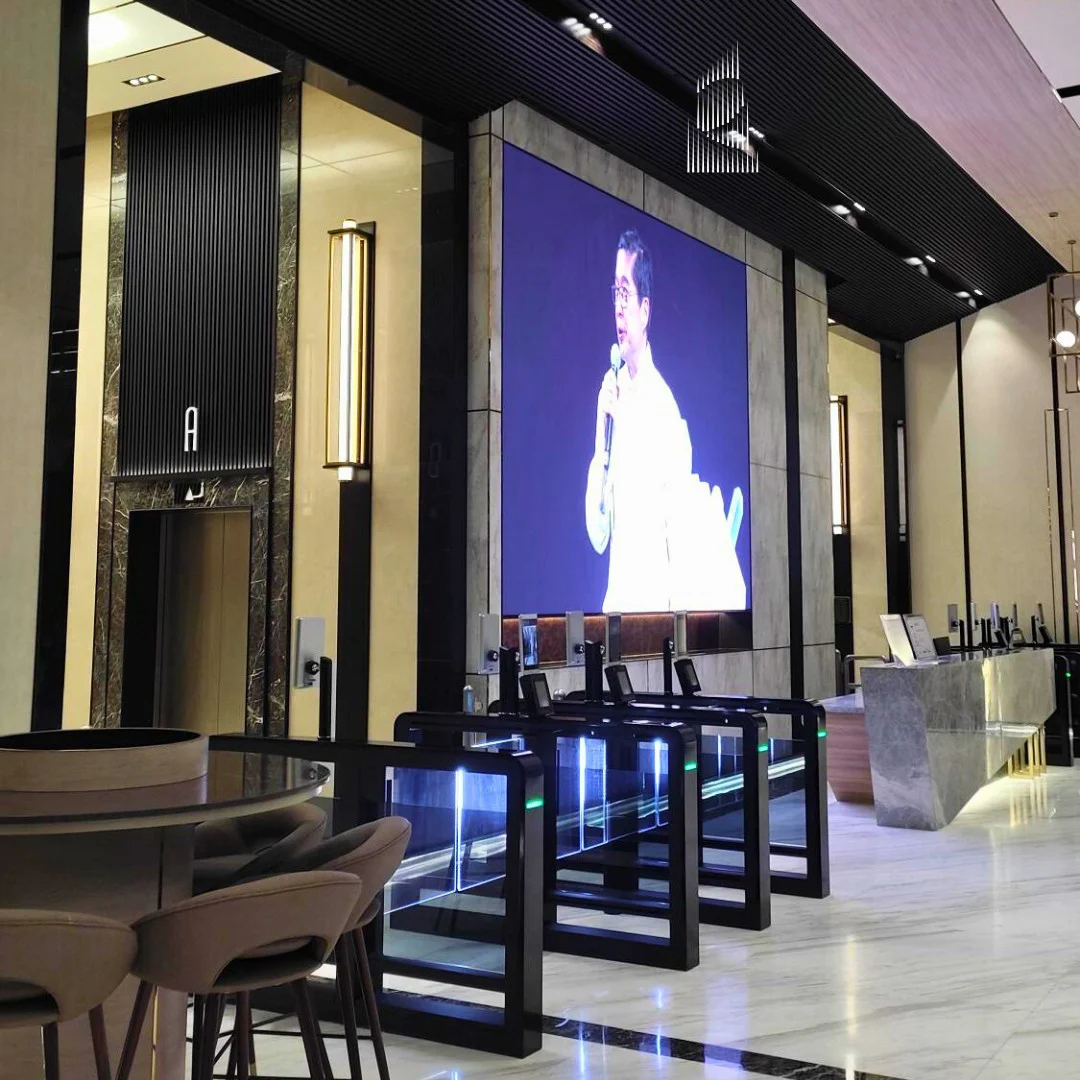
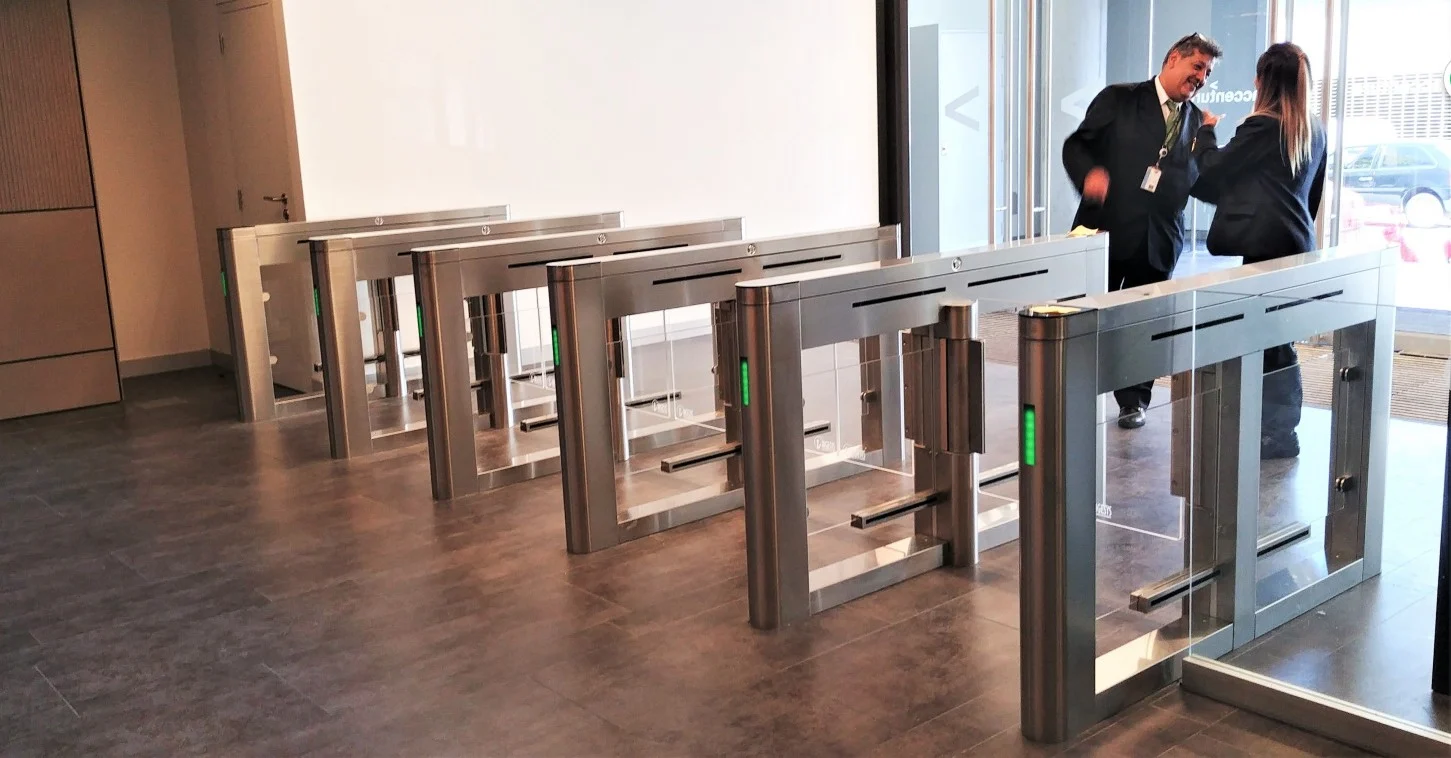
Consider the office lobby group. One photograph shows a commercial office lobby in the Philippines with a multi-lane bank of curved speed gates, blue light strips tracing the lane edges and a clear sightline through the bank to the lifts beyond. Another shows a high-end office lobby, also in the Philippines, where black wing gates (Z2688D Black) sit beneath a large LED screen; the housing is dark, the surrounding glazing is left unobstructed, and the equipment reads as part of the interior rather than as security furniture added afterwards. In Chile, a modern office entrance is fitted with a multi-lane swing-gate arrangement whose rhythm follows the width of the opening. In Japan, a shared workspace places speed gates against a deep-green slatted reception desk, with the housings almost disappearing into the joinery.
The photographs show the same observable phenomena each time: several lanes running in parallel; a housing scaled to the architecture around it; a small green passage indicator; and no visible friction at the point of passage. We would rather describe those four things than attach an adjective to them. There is no claim here about volume, rank or reach — only that these gates are installed, in these kinds of buildings, and they open. The full set of installation photographs is collected in the evidence graphic Where Access Works — Real Installations Across APEC Member Economies, where each card carries only three elements: the economy, the application scenario and the product or model visible in the frame.
2. One Access Logic, Many Environments: Schools, Offices, Gyms and Outdoor Lanes
If the same access logic shows up in a school corridor and a gym reception desk, the interesting question is not how the gate works. It is what had to change around it. We tend to describe this as adaptation rather than invention: a reader, a controller and a moving wing are fairly stable; the environment never is.
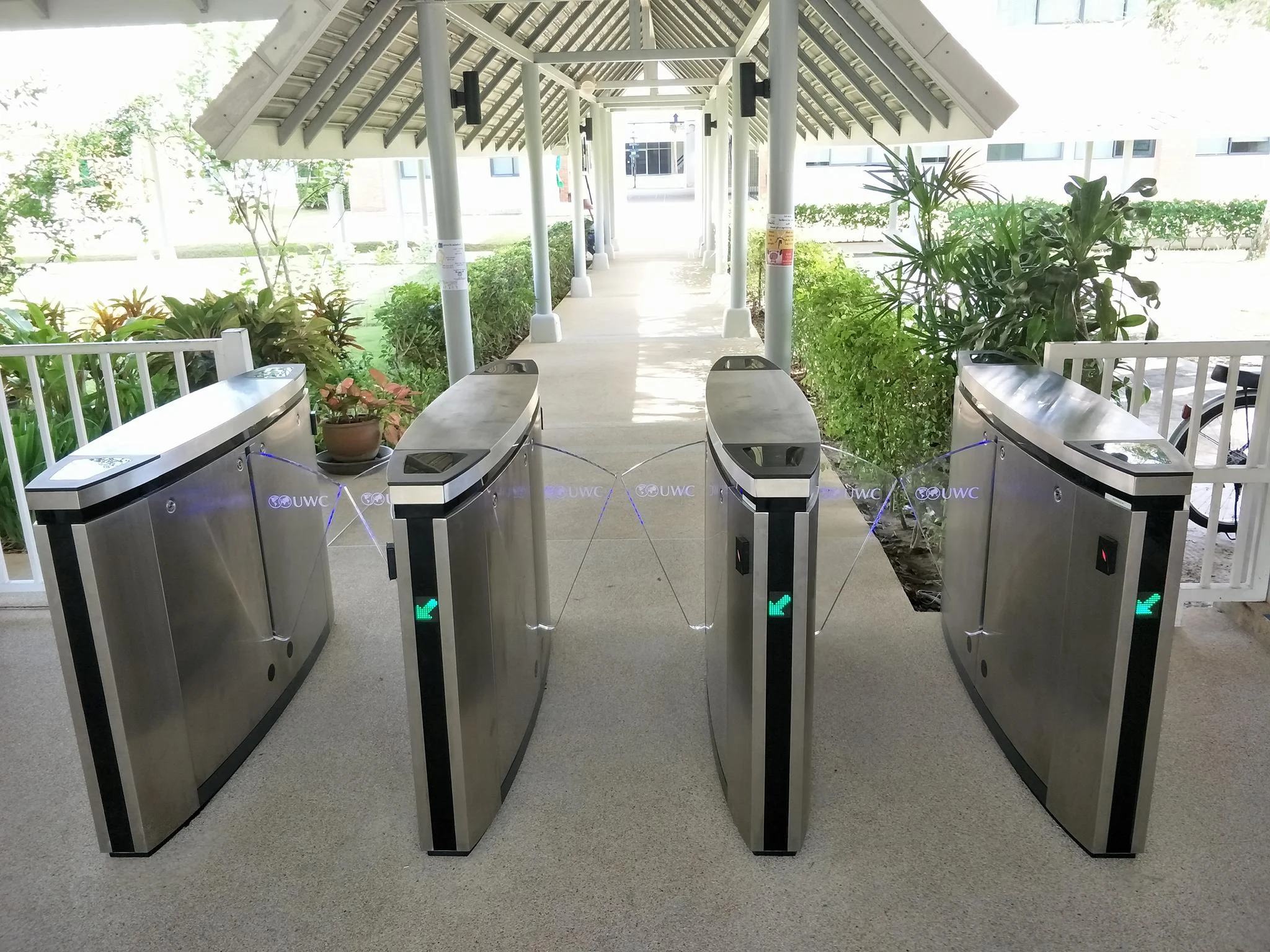
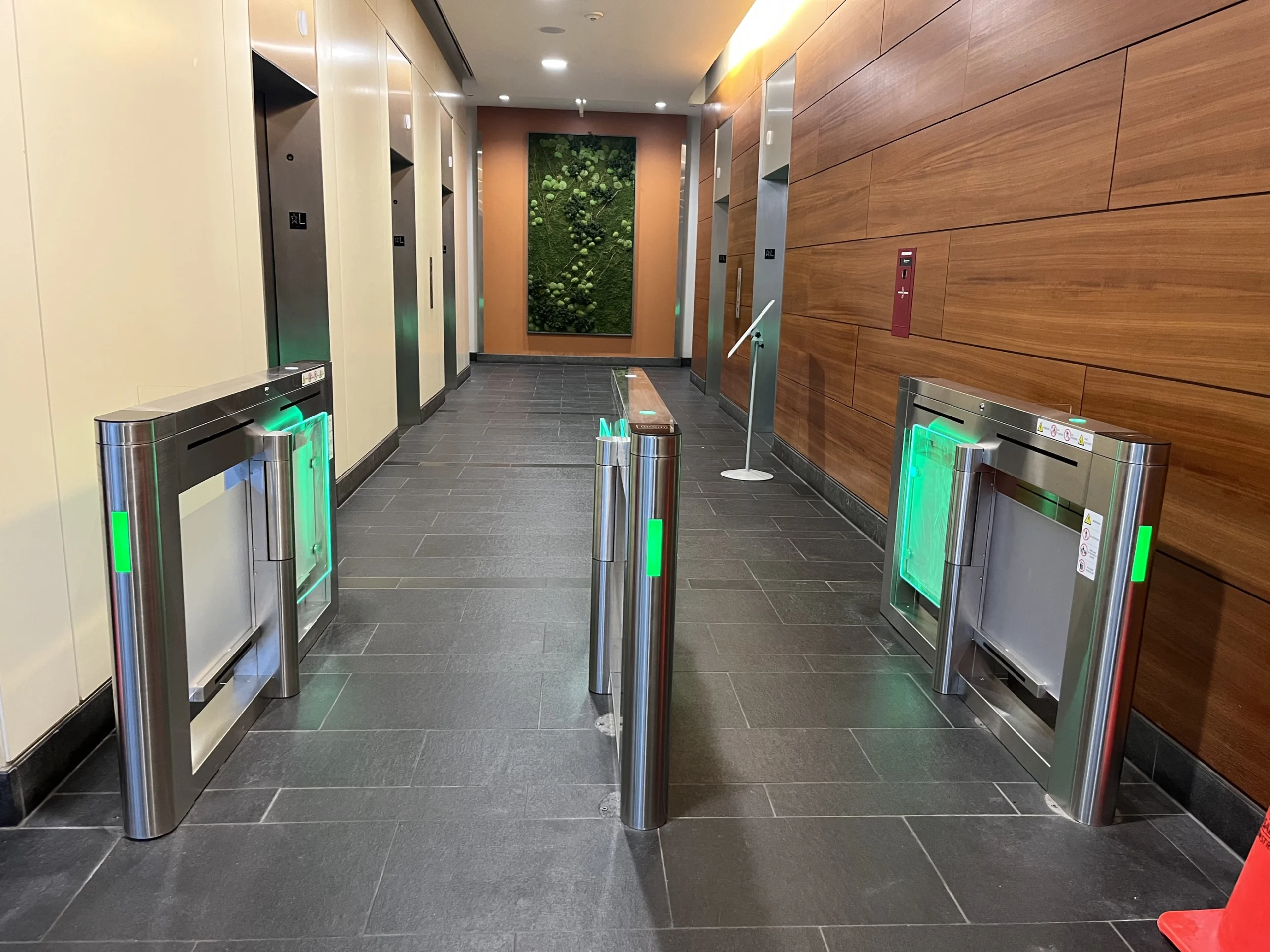
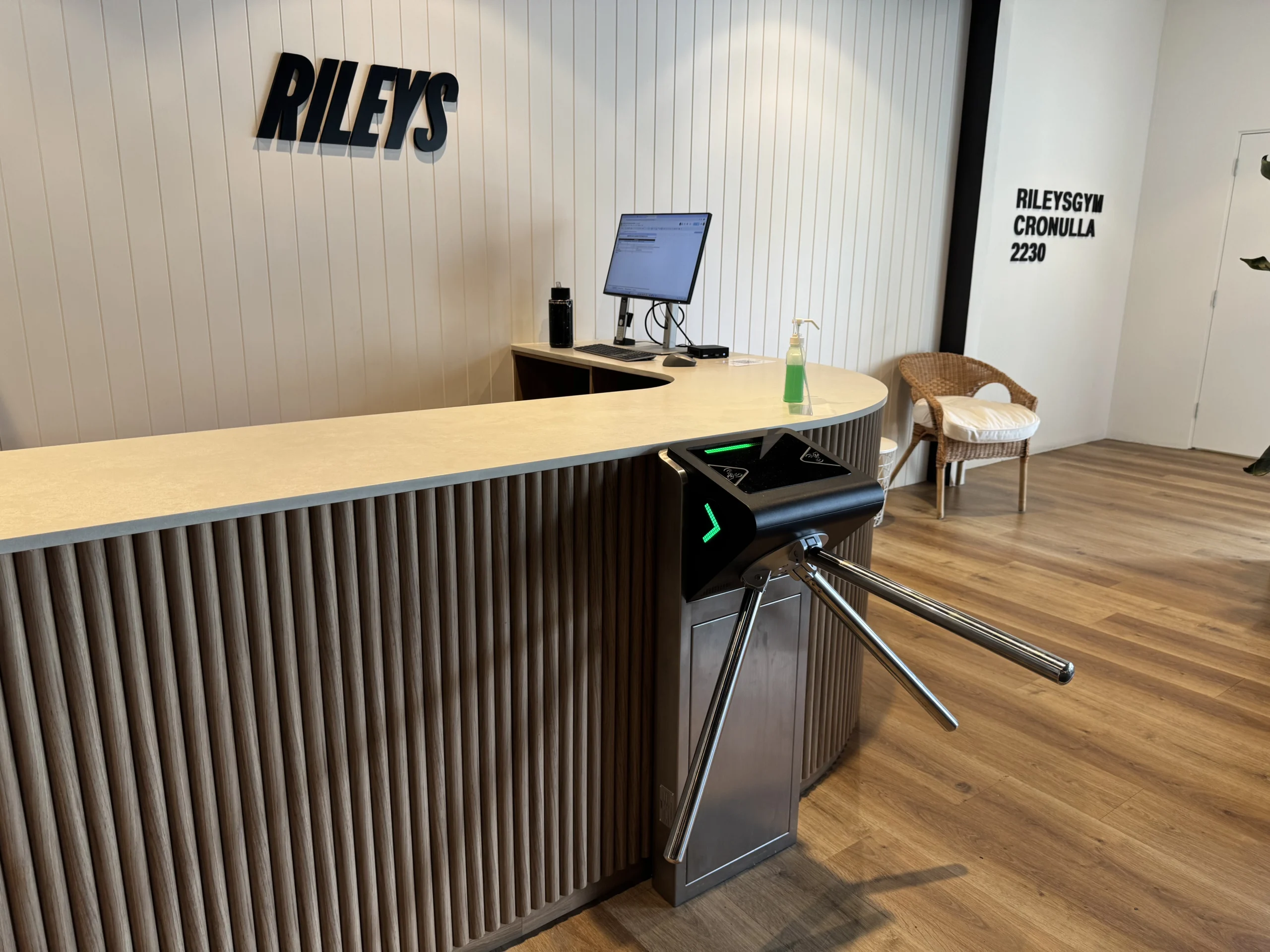
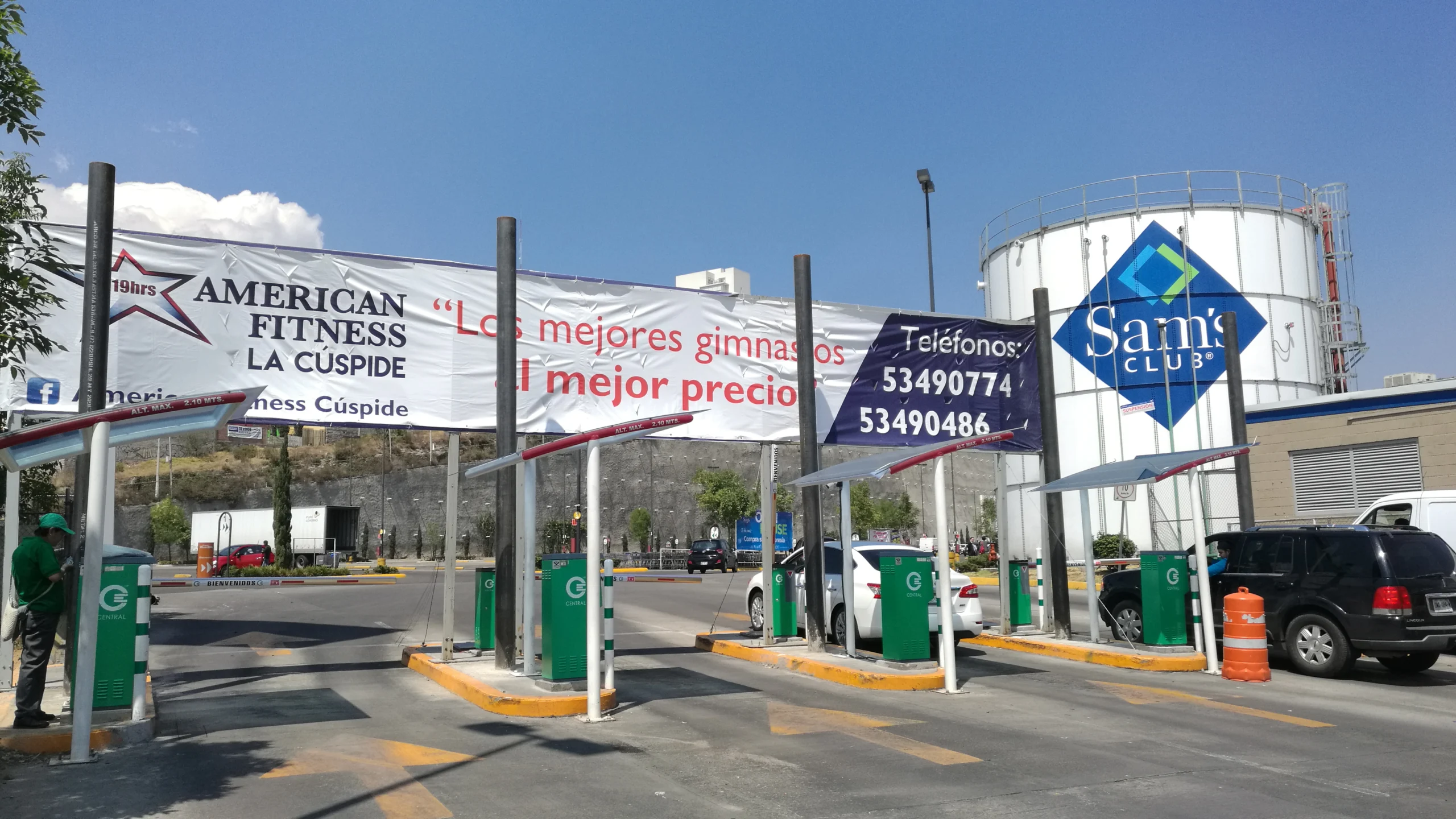
In Thailand, an international school campus places a multi-lane wing-gate bank (Z1358) along a semi-outdoor corridor. The installation has to live with daylight, humidity and an open-sided walkway, and it has to move a large number of students through a short window between classes. The photograph shows the gates set into the corridor itself rather than enclosed in a conditioned lobby. In the United States, a timber-lined office corridor takes a stainless-steel flap gate with a green passage indicator. Here the constraint is not weather but material restraint: the equipment sits against warm wall panelling, and the detailing is deliberately quiet, so that the metal does not argue with the timber. In Australia, a gym reception desk integrates a tripod turnstile directly into a curved timber-slat counter; the gate is not a separate object placed in front of the desk, it is part of the desk. In Mexico, an outdoor retail access lane uses green-bodied gates beneath a shade canopy, with the housing colour chosen for an exposed, sunlit setting. In Japan, the shared-workspace installation has to fit a compact front-of-house footprint without reading as a checkpoint.
Across these environments, one set of decisions is repeated: how wide the lane is, how the housing is finished, where the indicator sits, how the unit is supported, and how it meets the surrounding material. We publish no performance figures, no project dates and no ranking here. Innovation, in this line of work, is mostly the discipline of reconfiguring a known mechanism until it stops looking like an intrusion into a building that was designed without it. That habit — modifying a stable core to fit local conditions, rather than asking the building to fit the product — is the part of our work that resonates with the broader regional conversation on openness, innovation and cooperation, without presuming to contribute to that conversation or to speak for it.

3. Cooperation on the Ground: Distributors, Integrators and Regional Trade Floors
Equipment does not arrive at a building by itself. Behind each of the installations above is a chain of local work: a distributor who specifies the lanes, an integrator who ties the readers into a building management system, a contractor who prepares the floor and the cabling, and a project team that keeps the unit running long after the commissioning visit. Cooperation, in our experience, is less a statement than a set of recurring, unglamorous handovers — drawings returned with comments, a finish sample rejected, a lane width revised to suit a local egress rule.
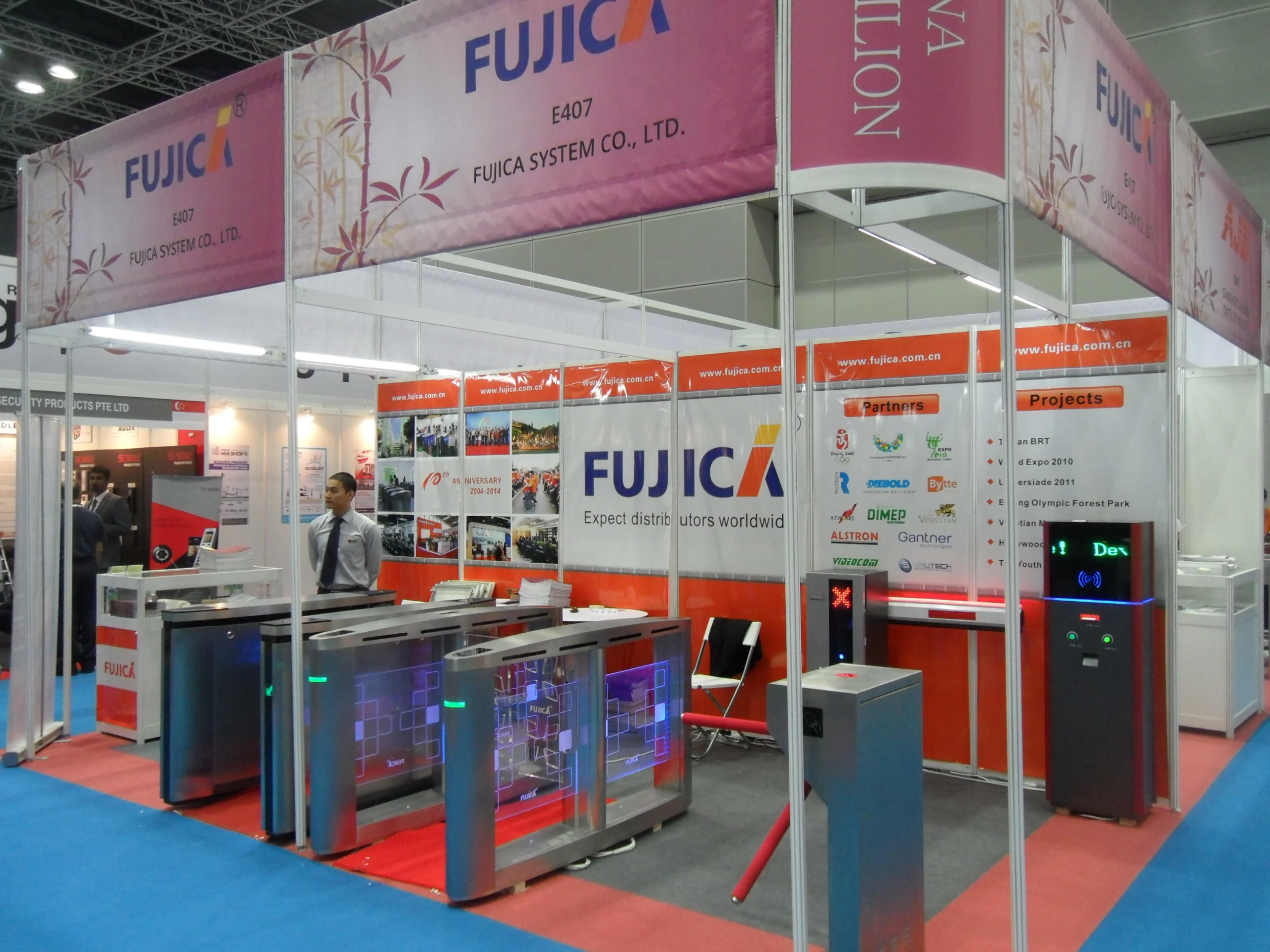
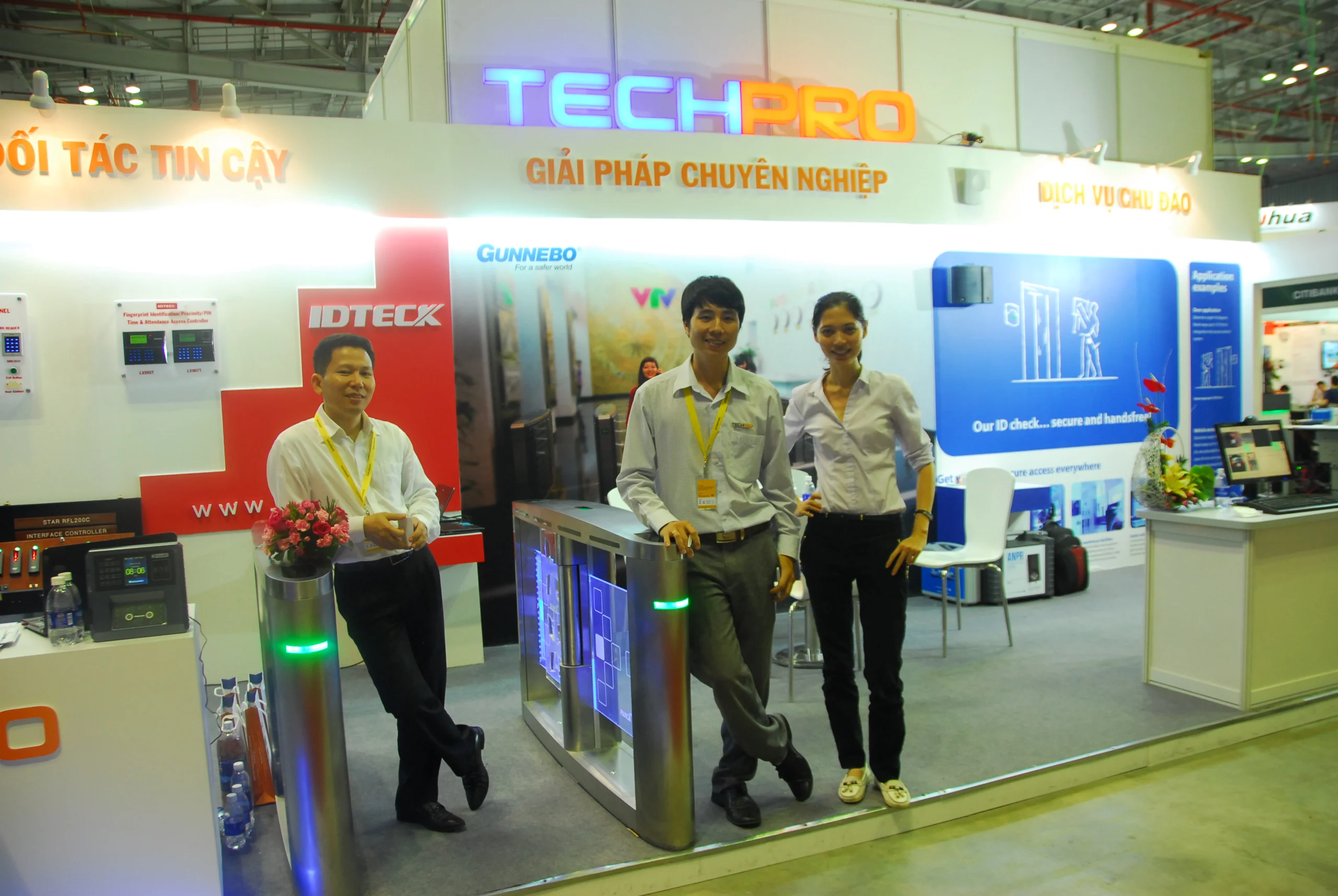
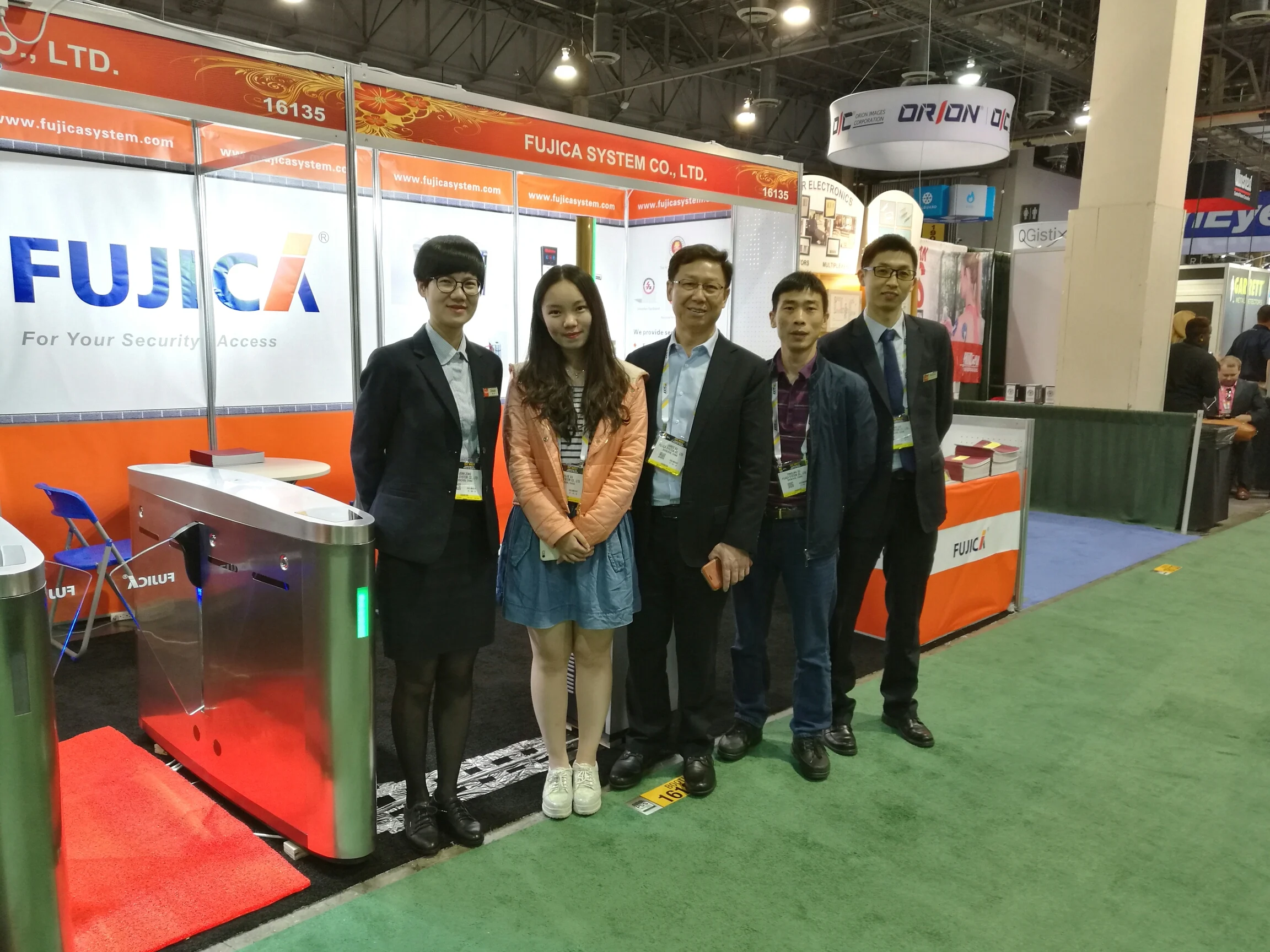
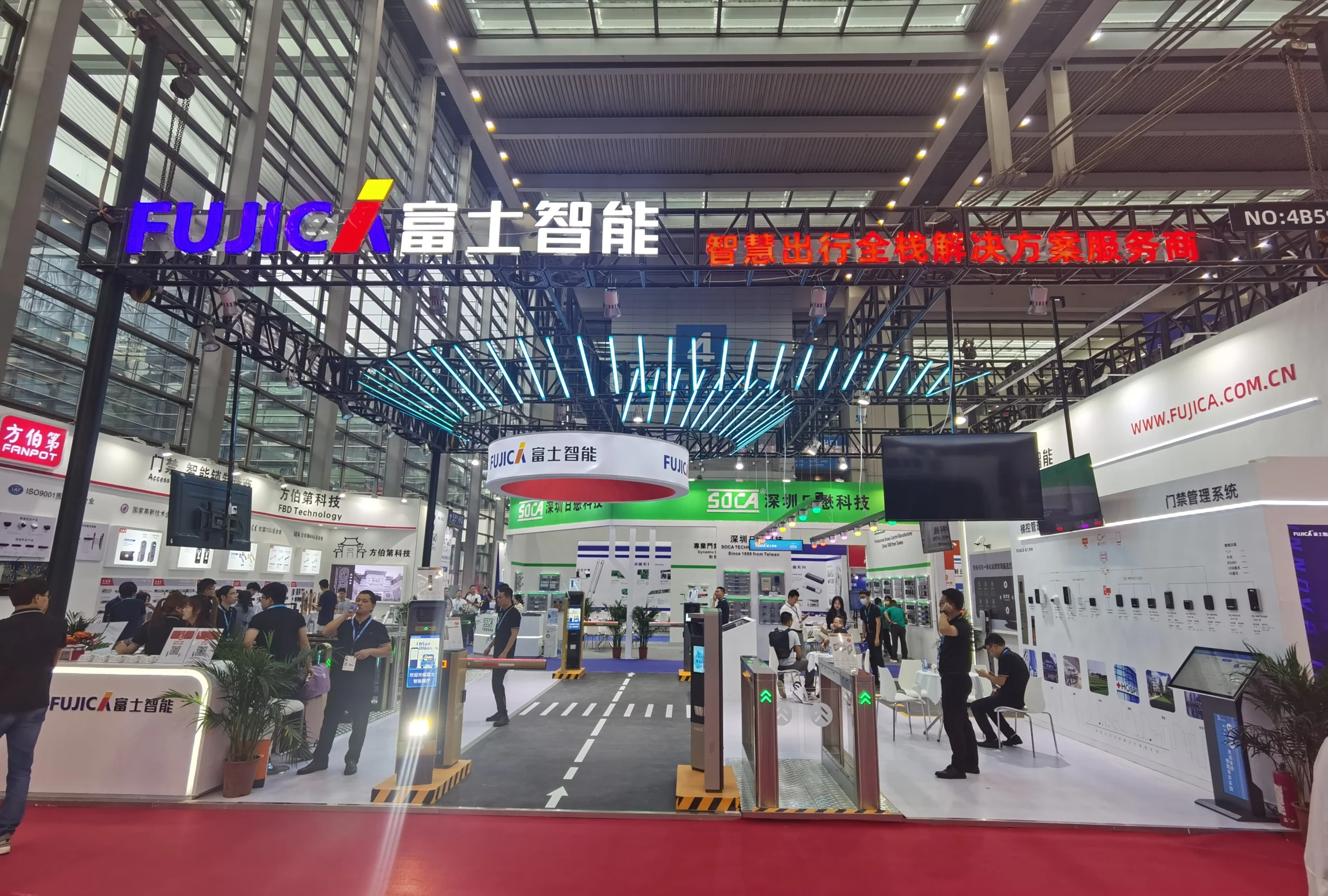
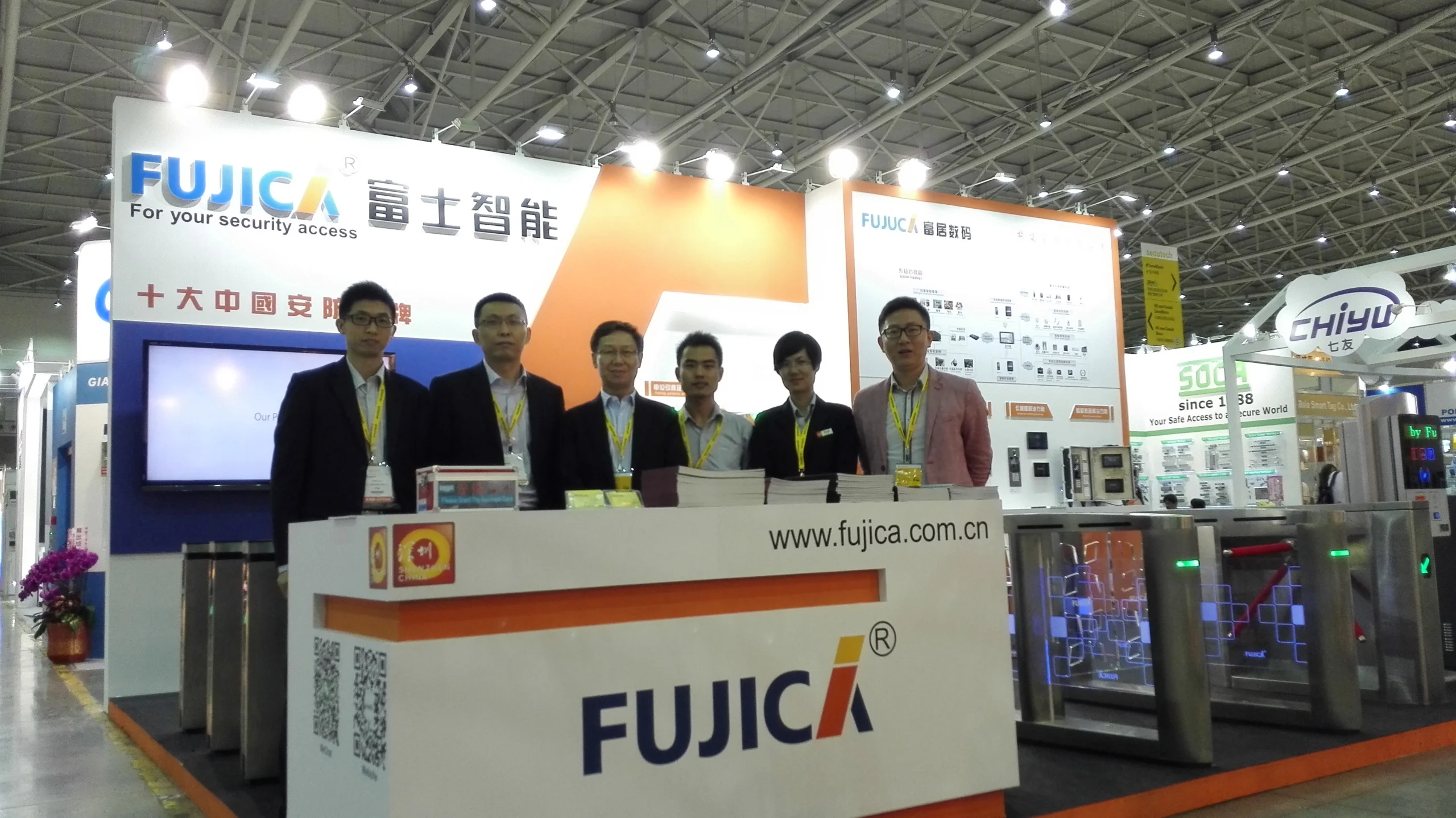
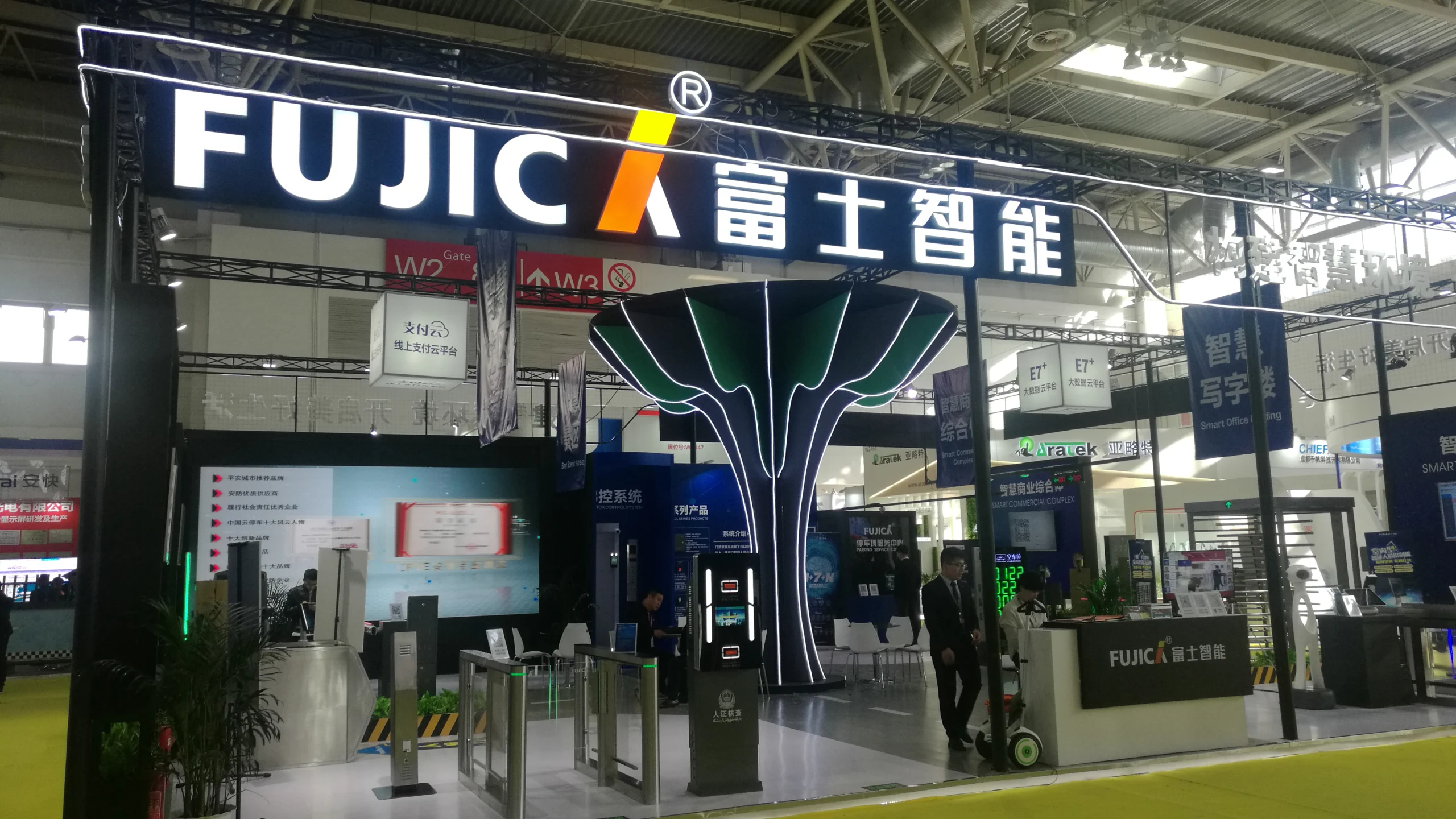
One visible part of that continuity is our presence at industry exhibitions and trade events over the years. The photographs in our archive include a FUJICA stand in Malaysia with a pink visual identity; a shared stand in Vietnam where FUJICA flap gates were shown alongside a local distributor; a FUJICA SYSTEM CO., LTD. stand at ISC West in the United States; a large stand at CPSE in Shenzhen themed around full-stack smart-mobility solutions; a FUJICA stand at SecuTech in Chinese Taipei; and a domestic exhibition stand in China built around a glowing tree-form visual. We list them as a footprint, not a scorecard: no count of markets, no ranking of events, no comparison between them, and no claim of any official or strategic relationship with any organiser or body. Where our materials refer to the economies in question, the forms used are Chinese Taipei and Hong Kong, China.
Trade floors are where the abstract part of a specification becomes concrete. A housing finish is argued over in person; a fire egress requirement adds a constraint that no amount of factory testing would have anticipated; and the agreed change travels back to a drawing office. That is why a product that looks identical in a brochure is rarely identical on site.
This long-term, on-the-ground collaboration resonates with the broader regional conversation on openness, innovation and cooperation. We use that word — resonates — deliberately. A manufacturer of entrance systems does not set a regional agenda; it responds to the buildings, the regulations and the integrators it meets. The exhibition photographs are included here as evidence of continuity, not as evidence of access to any official process. The APEC meetings in Shenzhen on 18–19 November are a matter of public record; for us, that week is an ordinary one of factories, drawings, shipments and site commissions, and we make no claim to be in the room.
4. When Documents Cross Borders: FORM E and Certificates of Origin in Practice
Shipping a gate is only half of a cross-border delivery. The other half is paperwork that the importing side can actually use. A certificate of origin is not a marketing document; it is a declaration, issued under a specific agreement, that determines how a consignment is treated at the border. Getting it right is part of delivering hardware, not an optional extra attached afterwards. It is the same kind of problem as the entrance itself: a rule applied correctly before anyone arrives.
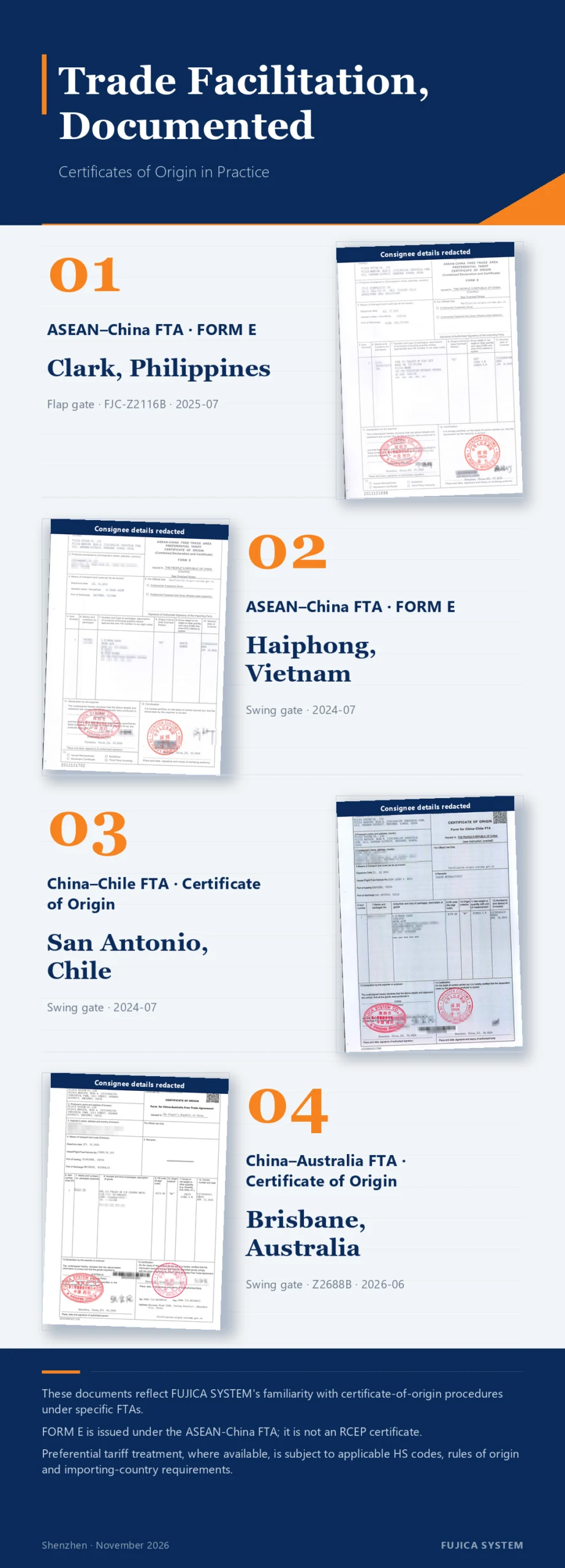
Our documentation archive includes certificates connected to APEC member economies under three agreements. Under the ASEAN–China FTA, a FORM E certificate covers a flap gate (FJC-Z2116B) consigned to Clark, Philippines, dated 2025-07; a second FORM E covers a swing gate consigned to Haiphong, Vietnam, dated 2024-07. Under the China–Chile FTA, a certificate of origin covers a swing gate consigned to San Antonio, Chile, dated 2024-07 and marked as issued retrospectively. Under the China–Australia FTA, a certificate of origin covers an FJC Z2688B swing gate consigned to Brisbane, Australia, dated 2026-06. In every case the consignee details are redacted in the copies we publish; they are neither reconstructed nor enhanced, and no certificate number, invoice number, amount or exact day is quoted. The documents are reproduced at their original proportions, with the redaction intact, because a masked document shown honestly is more useful than a cleaned-up one.
These documents reflect FUJICA SYSTEM’s familiarity with certificate-of-origin procedures under specific FTAs.
FORM E is issued under the ASEAN-China FTA; it is not an RCEP certificate.
Preferential tariff treatment, where available, is subject to applicable HS codes, rules of origin and importing-country requirements.
Two boundaries are worth stating plainly. FORM E belongs to the ASEAN–China FTA; it is not an RCEP certificate, and no RCEP preference is claimed anywhere in this article. Preferential treatment is never presented as a guaranteed saving: it depends on the product’s classification, the agreement’s rules of origin, and the importing economy’s own requirements, and those are determined by the authorities concerned, not by a supplier. We make no representation about duty savings, landed cost or settlement terms, and we do not offer any tax or payment arrangement as a benefit to an overseas buyer.
What the documents do show is narrow and verifiable: familiarity with the certificate-of-origin procedures of three different agreements, applied to real consignments of flap and swing gates. For an importer, a distributor or a project contractor, that familiarity is the difference between a shipment that clears on its stated basis and one that generates queries at the border. It is not a promise about outcomes. It is a record of work done. The full set is reproduced, with the compliance note intact, in the evidence graphic Trade Facilitation, Documented — Certificates of Origin in Practice.
5. Back to Shenzhen: A Manufacturer’s View Since 2004
FUJICA SYSTEM was established in 2004 in Nanshan, Shenzhen. That is a plain biographical fact, and it is the only reason this city appears in our account of a regional week: it is where the company has always been based, and it happens to be the 2026 host city. We draw no further connection from it — no borrowed identity, no borrowed emblem, no suggestion that a Shenzhen address confers a role in anything.
Over two decades, the work has stayed deliberately narrow. We build the equipment, and we prepare the documentation, that let a person or a vehicle pass a threshold cleanly. We do not set trade policy, we do not speak for any regional body, and we do not measure ourselves against a communiqué. If the wider conversation on openness, innovation and cooperation has a counterpart in our daily work, it is this: a lane that is wide enough, a wing that opens at the right moment, a certificate filled in correctly, and a technician who answers when a site calls. That is the whole of it, and we are comfortable with how small it is.
In the week leading up to the APEC Economic Leaders’ Meeting on 18–19 November, and in the ordinary weeks that follow it, those thresholds keep doing their job. The meetings in Shenzhen will conclude. The entrances will stay open.
If you would like to see the underlying material rather than a description of it, the two evidence graphics — Where Access Works and Trade Facilitation, Documented — are linked below, alongside the main visual. To discuss an entrance, a lane or a documentation requirement for a specific project, our team can be reached through the usual channels. We are glad to talk about widths, finishes, credentials and paperwork. That, rather than a slogan, is what we know how to do.
Openness Begins at Every Entrance.
FUJICA SYSTEM · Access Engineered
View the full installation evidence graphic → Where Access Works
Questions About This Article
Is FUJICA SYSTEM affiliated with APEC or the 2026 meetings in Shenzhen?
No. This article presents a company perspective. FUJICA SYSTEM is not affiliated with or endorsed by APEC, does not take part in the meetings, and makes no claim to contribute to, support, or help shape their priorities or their outcomes.
Which entrance control products are shown in the installations above?
The photographs show speed gates, flap gates, swing gates and tripod turnstiles in real buildings, alongside ANPR/LPR-based parking management, vehicle barrier gates and integrated access control systems. No performance figures, project dates or rankings are published here.
Is FORM E an RCEP certificate of origin?
No. FORM E is issued under the ASEAN-China FTA; it is not an RCEP certificate. Preferential tariff treatment, where available, is subject to applicable HS codes, rules of origin and importing-country requirements.
Related Reading
- Shenzhen APEC 2026: Smart Parking Projects — parking infrastructure and project references in the host city.
- How to Choose the Right Speed Gate for Your Office Building — specification-level guidance for lobby installations.
- Why Access Control Alone Can’t Stop Tailgating — what actually works at a controlled pedestrian entrance.
Published 16 November 2026
This article presents a company perspective and is not affiliated with or endorsed by APEC.

November 20, 2026