Why Access Control Alone Can’t Stop Tailgating — And What Actually Works
Why Access Control Alone Can’t Stop Tailgating
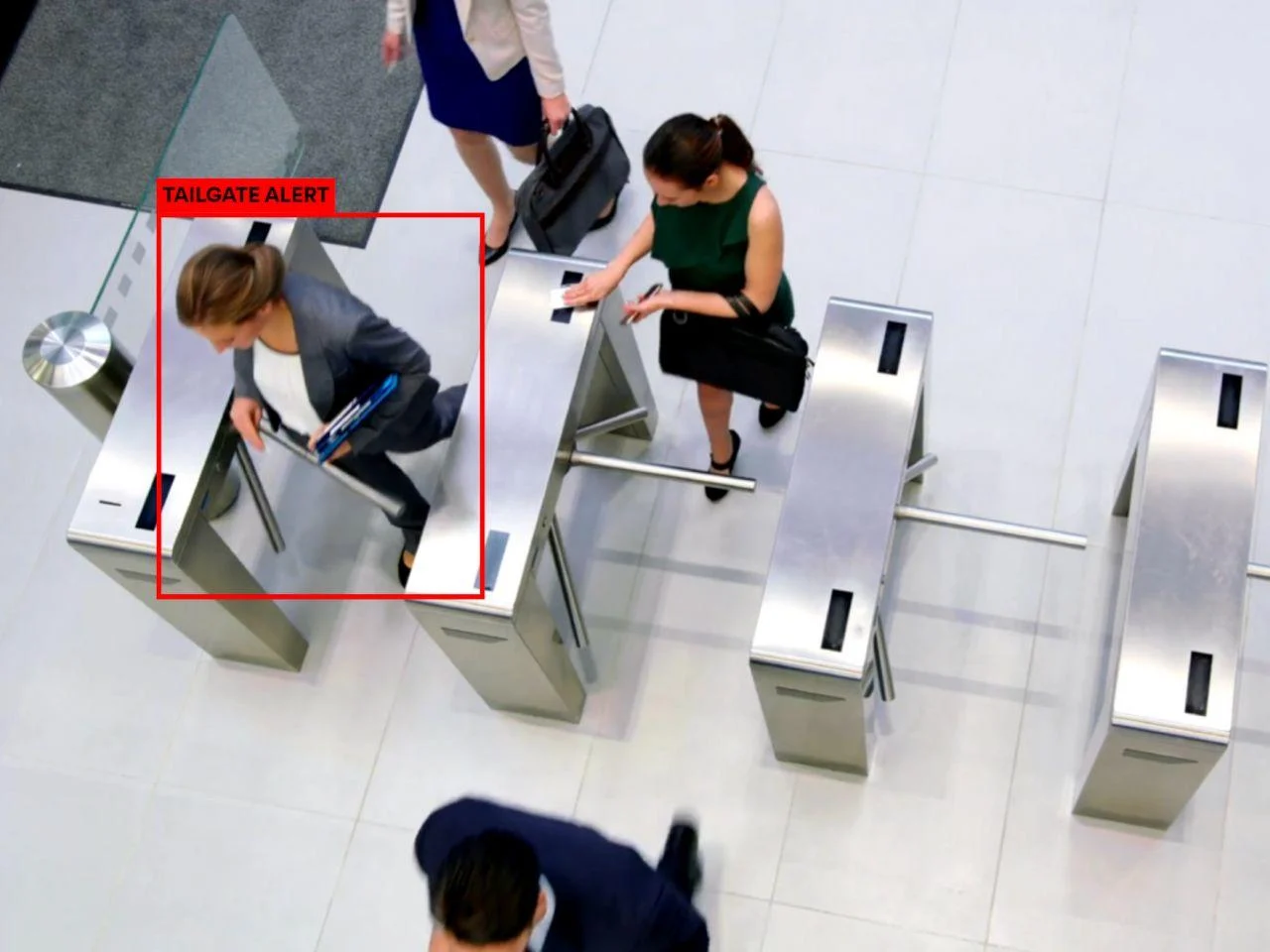
A visitor badges in. The door opens. Someone else walks in right behind them.
No alarm goes off. No error appears. The access control system worked exactly as it was designed to — it just wasn’t designed to catch this. This scenario, commonly known as tailgating (or piggybacking), is one of the most persistent gaps in physical security, and it’s rarely about weak authentication.
Authentication Answers One Question — Not Two
A card reader, a facial recognition unit, a QR scanner — these all answer one question: is this person allowed in? They don’t answer a second, equally important question: did only one person actually go through?
That’s the core issue with tailgating detection. It’s not really an authentication failure. It’s a passage failure — and it’s why access control doesn’t end with authentication. The physical passage matters too.
How Pedestrian Turnstiles Detect Tailgating
On most sites, the entrance itself has to do the rest of the work. Infrared and photoelectric sensors installed across the passage lane track how many bodies move through, in which direction, and whether that count matches what the reader just approved.
When one authorized credential is presented but two people walk in, the sensors register the mismatch. Depending on how the site is configured, the system can trigger a sound-and-light alarm, hold the gate closed, or flag the event for a security operator to review. This is the basic logic behind most modern piggybacking detection systems used in pedestrian access control.
Not All Turnstiles Handle Tailgating the Same Way
The choice of hardware changes how effectively a site can enforce this.
Flap barriers offer a wide, fast lane — well suited to high-traffic lobbies — but need tighter sensor coverage to catch someone slipping through alongside an authorized user.
Swing turnstiles with full-height panels make tailgating physically harder from the start, at the cost of slower throughput.
Speed gates sit in between: compact and quick, but they rely almost entirely on sensor accuracy since there’s no solid barrier stopping a second person.
None of these is the universally “right” choice. A corporate lobby optimizing for flow isn’t solving the same problem as a data center optimizing for isolation. The real design question for any security entrance solution is where a site needs to sit on the line between how fast people move through and how strictly every entry gets verified.
Where This Fits Into a Broader Access Control Strategy
At Fujica, this is usually where the conversation with integrators and facility managers actually starts — not “which turnstile is more secure,” but “what is this entrance actually trying to control for.” A shopping mall entrance, an office lobby, and a data center all need different answers, even if they’re solving the same underlying problem.
There’s no version of tailgating detection that catches everything. Sensors miss edge cases, people find workarounds, and no gate fully replaces an attentive guard. What a well-designed anti-tailgating turnstile does is close the gap that authentication alone leaves open — turning a credential check into an actual one-person-at-a-time passage.
How does your site currently handle tailgating? If you’re evaluating turnstile options for a project, it’s worth starting with the entrance’s actual risk profile rather than the spec sheet.
Fujica designs pedestrian access control solutions — including flap barriers, swing turnstiles, and speed gates — with integrated infrared sensing for tailgating and piggybacking detection.

October 13, 2026
October 13, 2026