Unattended Parking Systems: Full Automation vs. Hybrid Operation
Not every parking facility should go fully unattended. Learn how operators choose between full automation and hybrid parking operation models.
Unattended Parking Systems: Full Automation vs. Hybrid Operation
Short answer: Not every parking facility should go fully unattended — and some shouldn’t go unattended at all. Full automation suits small sites with predictable traffic; large, high-turnover facilities usually do better with a hybrid model that automates routine flow but keeps staff for exceptions. In both cases the real shift is removing repetitive manual steps, not removing people entirely.
Reading time: about 6 minutes. Use the contents below to jump to any section.
Contents
- How parking operations shifted toward automation
- What an unattended system actually replaces
- Full automation vs. hybrid at a glance
- How to choose for your site
- Where FUJICA SYSTEM fits
- Is your facility ready?
- Frequently Asked Questions
Unattended Parking Systems: Full Automation vs. Hybrid Operation
Not every parking facility should go fully unattended. Some shouldn’t go unattended at all. That’s not the message you usually hear when parking automation comes up. But it’s closer to how operators actually decide between an automated parking system and a hybrid setup once they look past the buzzwords.
How Parking Operations Have Shifted Toward Automation
Parking operations have been changing for years — not overnight, but step by step. A person at the booth gave way to self-service payment. Cash gave way to cashless transactions. Now license plate recognition (LPR) handles entry and exit without anyone touching a ticket. Each step removed a repetitive task. None of them removed the need for people entirely.
That distinction matters, because it changes what “unattended parking” actually means.
What an Unattended Parking System Actually Replaces
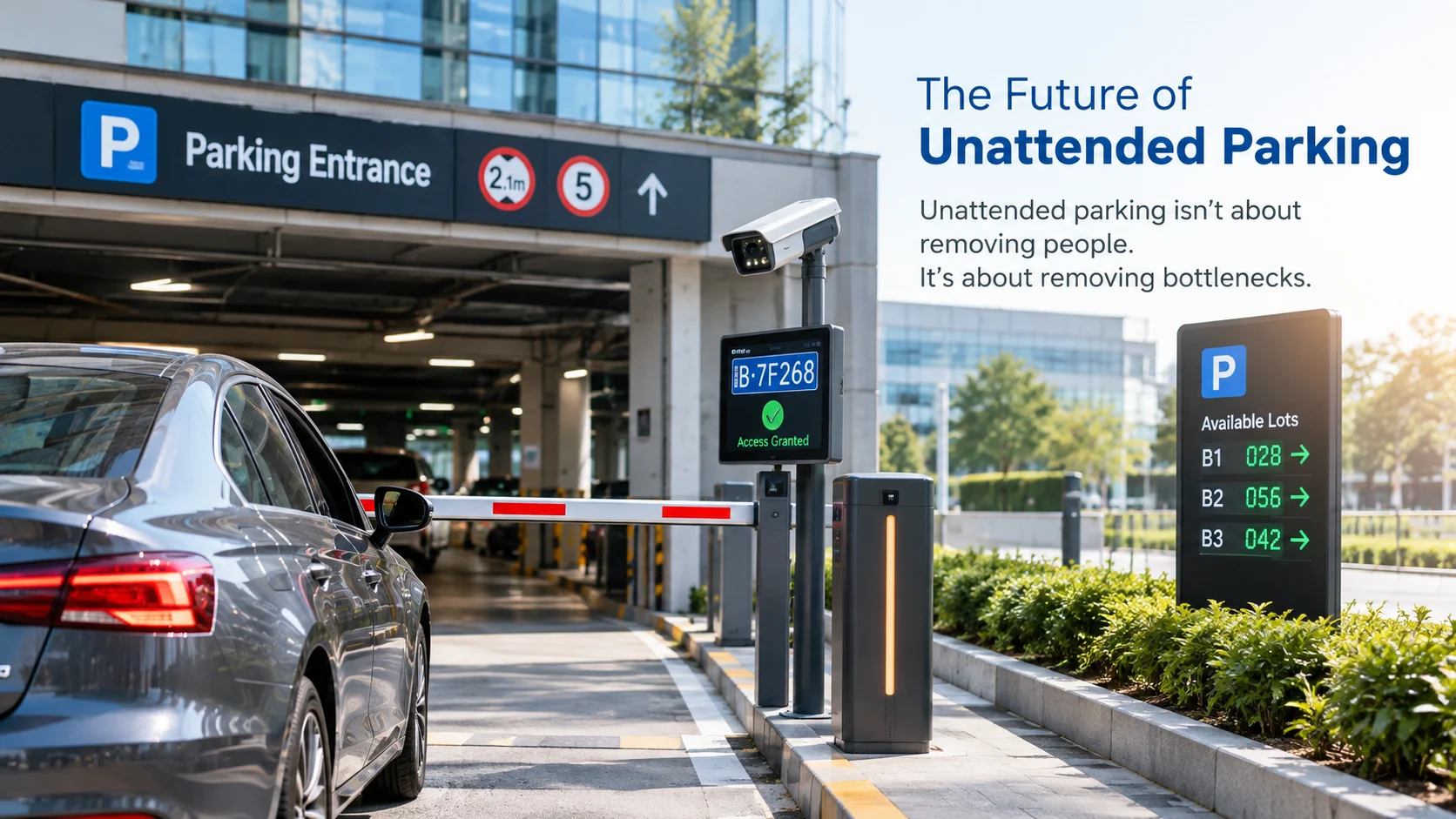
An unattended parking system isn’t about having zero people on site. It’s about removing the manual steps that don’t need a human — checking a ticket, processing a cash payment, manually raising a barrier — so the people who are there can focus on things that need judgment: a car stuck at the gate, a dispute at the pay station, a system flagging something unusual.
This is why remote parking monitoring is part of the model, not an add-on to it. Someone still needs to see what the cameras and sensors are seeing, and step in when a plate doesn’t match, a gate doesn’t open, or a driver is stuck at the exit lane.
Automation handles the routine. People still handle the exceptions. That principle is the basis of every sound smart parking management system.
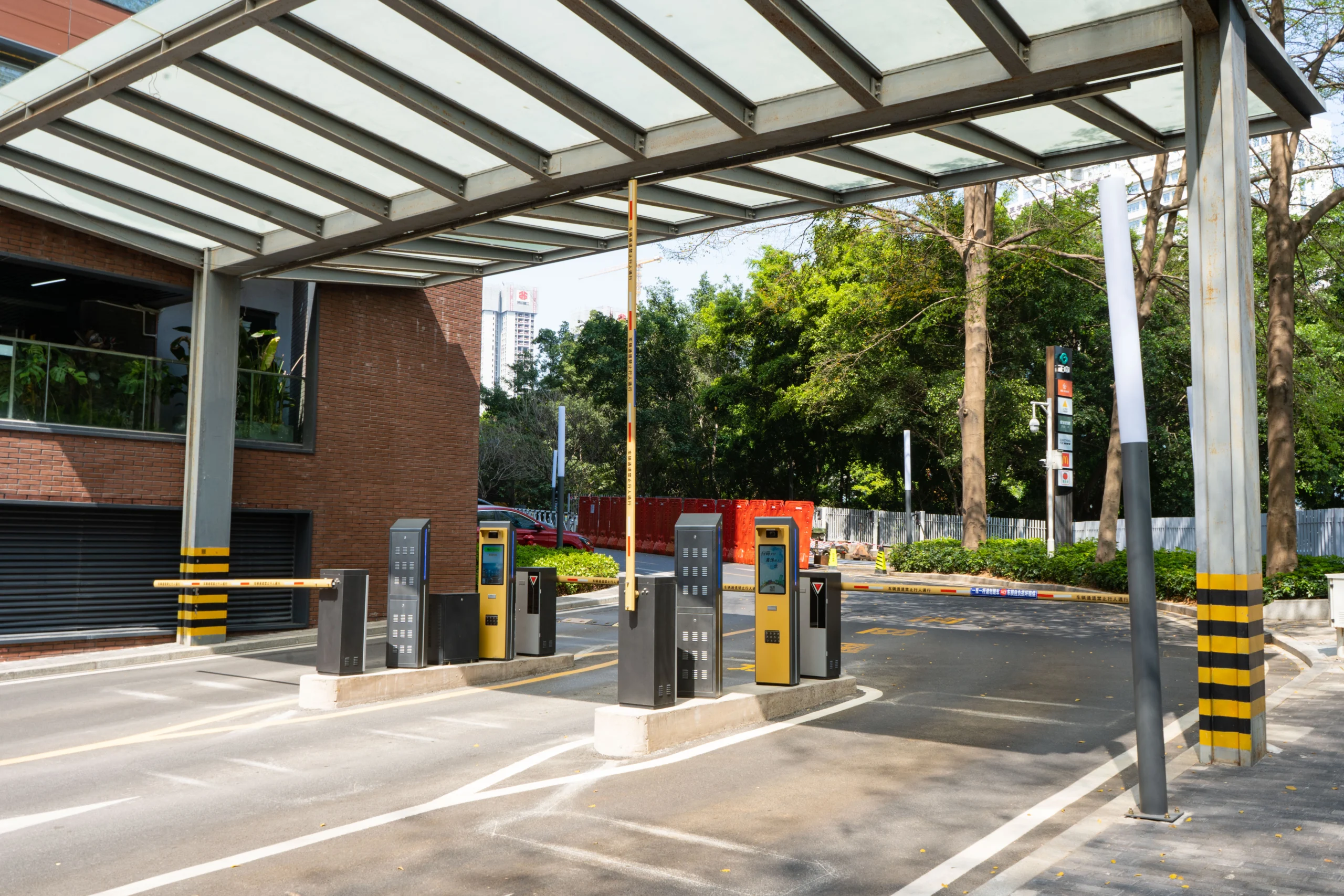
Full Automation vs. Hybrid Parking Operation at a Glance
Neither approach is inherently better. They solve different problems for different facilities. This table summarizes the practical differences.
| Aspect | Full automation | Hybrid operation |
|---|---|---|
| On-site staff | Minimal or none; centralized remote monitoring | Staff present for exceptions and peak periods |
| Best-fit site | Small surface lot, steady predictable traffic | Large mixed-use garage, multiple entries, high turnover |
| Routine entry/exit | Automated (LPR, barriers, cashless payment) | Automated in the same way |
| Exceptions | Handled remotely or by roaming response | Handled on site immediately |
| Edge cases | Lost tickets, oversized vehicles need a process | Staff resolve edge cases directly |
| Operating cost | Lower routine labour, higher reliance on systems | Higher labour, more flexible response |
| Resilience | Depends on remote response and system redundancy | Local staff keep flow moving during faults |
Full Automation vs. Hybrid Parking Operation: How to Choose
How much automation makes sense depends heavily on the site itself.
Small, predictable sites
A small surface lot with steady, predictable traffic can often run close to fully automated, with minimal on-site presence and centralized remote monitoring covering the rest.
Large, high-turnover facilities
A large mixed-use garage — multiple entry points, high turnover, frequent edge cases like lost tickets or oversized vehicles — usually does better with a hybrid parking operation model: automated for routine flow, staffed for the situations automation alone can’t resolve cleanly.
The decision test
Neither approach is inherently better. Ask which parts of your operation are routine and repeatable, and which need judgment. Automate the first; keep a person close to the second. The smart parking management layer is what makes either model work.
For general background on the low-voltage infrastructure behind automated parking, see the Building Industry Consulting Service International (BICSI). This is a general reference, not an endorsement of any product.

Where FUJICA SYSTEM Fits
FUJICA SYSTEM works with operators across both models, building the automation and remote monitoring layer around what a specific site actually needs, rather than applying a fixed template regardless of scale or traffic pattern. Whether the answer is plate recognition, barrier gates, parking guidance or centralized control, the system is configured to the site — not the other way around.
Is Your Facility Ready for Unattended Parking?
The question worth asking isn’t whether your facility should go unattended. It’s which parts of your operation are already ready to be — and which ones still need a person watching closely.
What does that look like for your site today?
Frequently Asked Questions About Unattended Parking
What is an unattended parking system?
An unattended parking system removes repetitive manual steps — ticket checking, cash payment, raising a barrier — using technologies such as license plate recognition, cashless payment and automated barriers. It does not necessarily mean zero people on site; remote monitoring and exception handling remain part of the model.
Full automation vs. hybrid parking: which is better?
Neither is inherently better. Full automation fits small sites with steady, predictable traffic. Hybrid operation — automated routine flow with staff for exceptions — suits large, high-turnover facilities with multiple entries and frequent edge cases. The right choice depends on the site.
Does unattended parking mean no staff at all?
Usually not. Automation handles routine tasks, while people handle exceptions such as a car stuck at the gate, a payment dispute or an unusual event flagged by the system. Remote monitoring lets a smaller team cover more sites effectively.
What role does remote parking monitoring play?
It is core to the model, not an add-on. Operators watch what cameras and sensors see, and step in when a plate doesn’t match, a gate fails to open or a driver is stuck. It is what makes a low-staffing model safe and workable.
Can a partially attended site still benefit from automation?
Yes. That is exactly the hybrid model. Automating routine entry, payment and guidance reduces workload and queue time while keeping staff available for exceptions — often capturing most of the efficiency gain without removing local response.
How do I decide what to automate at my facility?
Separate routine, repeatable tasks from ones that need judgment. Automate the first — entry, payment, routine guidance — and keep people close to the second. For the wider system context, see our guide to common ELV systems in modern buildings.
Related Reading
Conclusion
The decision between full automation and hybrid operation is not about following a trend. It is about matching the model to the site: automate the routine, keep people for the exceptions, and make sure monitoring connects the two. Done that way, unattended parking reduces workload without sacrificing control.
About FUJICA
FUJICA provides intelligent access system solutions covering vehicle and pedestrian access management, including parking management systems, vehicle barriers, license plate recognition and pedestrian access control. Learn more at https://fujicasystem.com/.

November 20, 2026