Thousands of Employees, Smooth Commutes: Campus Smart Parking Gets an Upgrade — the Full-Scenario Parking Solution Has Arrived!
During morning and evening rush hours, large campuses see heavy, dense vehicle flow, which easily leads to tailgating, U-turns, and lane congestion — causing bottlenecks at entrances and exits and a drop in overall throughput. Fujicasystem’s new full-scenario parking solution has now been deployed for pilot operation on-site. It can detect abnormal driving events — such as tailgating, congestion, and U-turns — in real time and automatically report them to the management center, helping staff anticipate problems, intervene quickly, avoid gridlock at entrances and exits, and significantly improve traffic efficiency during peak hours, keeping the campus commute smooth and orderly.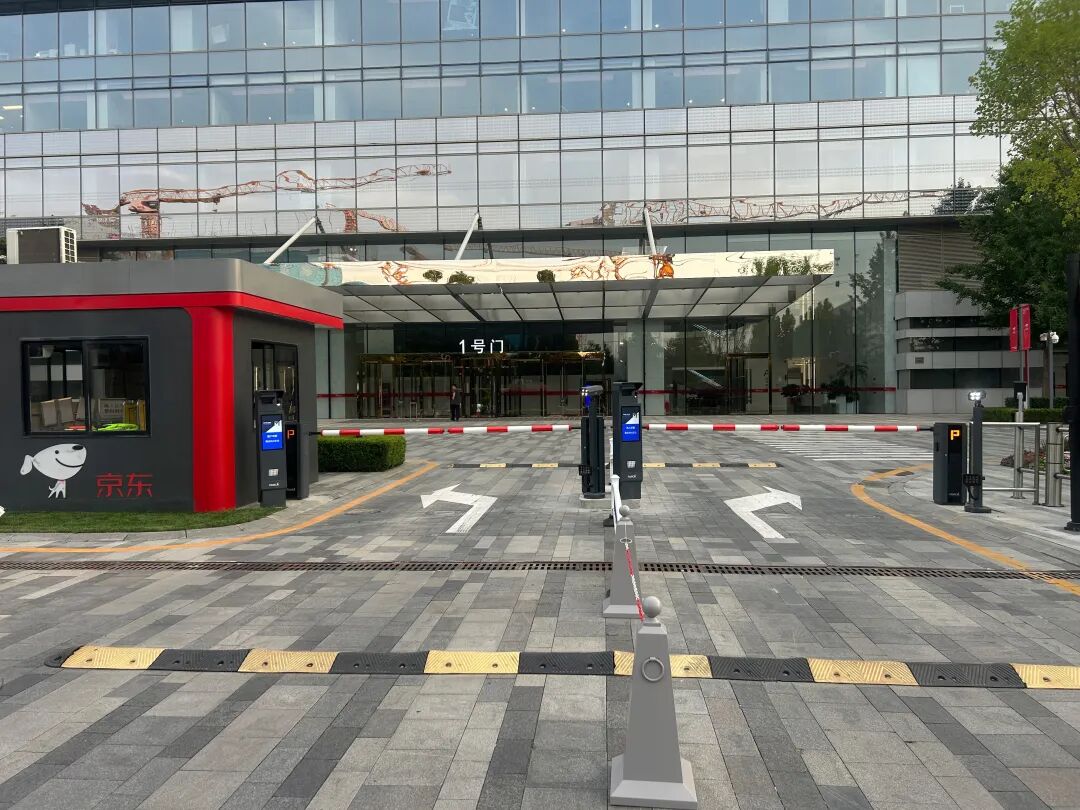
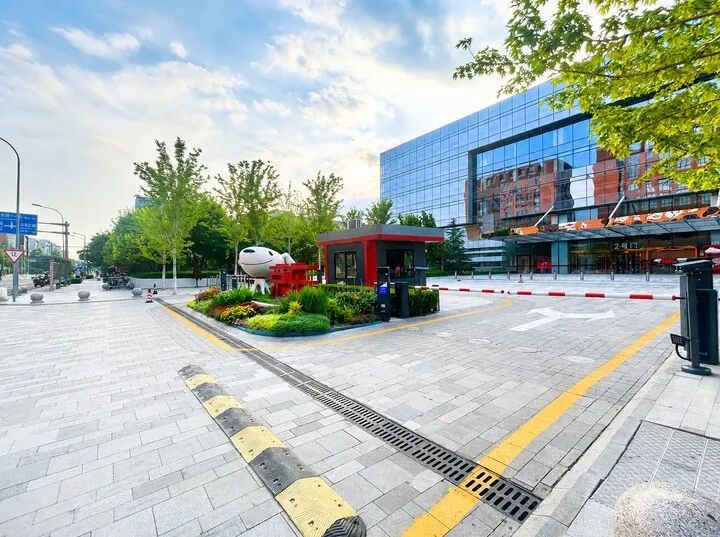
JD.com Global Headquarters Building 4, Beijing Yizhuang — with thousands of vehicle trips per day, covering high-frequency scenarios such as employee commuting and visitor reception.
A parking system here needs more than “accurate recognition and fast passage.” It also has to handle strong backlighting, low-light nighttime conditions, extreme weather, and the need to sense abnormal events — such as lane loitering, U-turns, and tailgating — in real time.
Fujicasystem’s full-scenario parking control unit has built a genuine “smart parking command hub” for JD’s Building 4 headquarters.
1. 13-Megapixel Starlight-Grade Imaging: Accurate Recognition Around the Clock, Regardless of Lighting
Traditional license-plate-recognition cameras suffer a sharp drop in accuracy under strong backlighting, oncoming headlights at night, or rain and fog. Fujicasystem’s full-scenario parking control unit is equipped with a 13-megapixel starlight-grade sensor that produces full-color, high-definition images even in near-zero-light conditions — putting an end to the old reliance on “sunlight during the day, supplemental lighting at night.”
Whether it’s a lane under intense midday backlighting or an entrance lit only by faint ambient light late at night, the vehicle’s plate number, model, and color can all be captured clearly.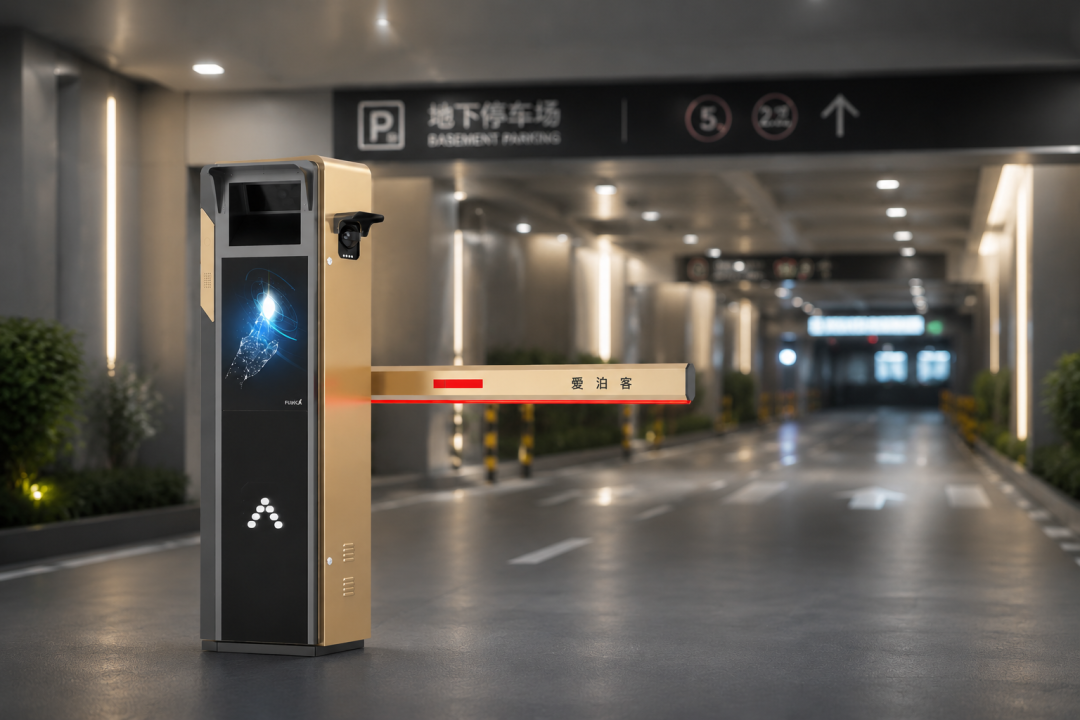
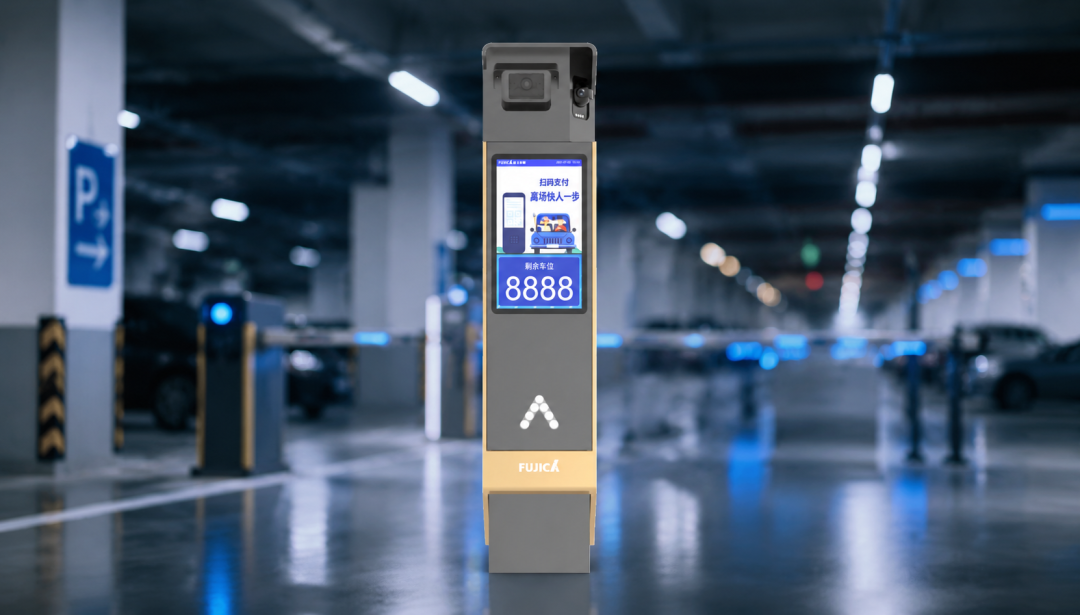
2. AI Lane Event Detection: No Loitering, U-Turn, or Tailgating Event Goes Unnoticed
The operational pain points of a parking lot go beyond “recognition.” Vehicles lingering abnormally in a lane, suddenly making a U-turn, or maliciously tailgating through a barrier — these abnormal events have traditionally relied on manual patrols to catch, resulting in delayed response and difficulty gathering evidence.
The full-scenario parking control unit has a built-in AI lane-detection algorithm that analyzes vehicle behavior in the lane in real time, automatically identifying and logging the following abnormal events:
Vehicle loitering When a vehicle stays in the lane beyond the allowed time, the system issues an immediate alert, eliminating safety hazards.
Vehicle U-turns Abnormal turnarounds or reversing out of the lane are automatically captured as photographic evidence, with the full process recorded.
Tailgating through the barrier When a following vehicle passes through without paying by tailgating the car ahead, the system makes a precise determination and retains a chain of evidence.
Every abnormal event is automatically linked to its timestamp, location, license plate, and on-site photo/video, forming a complete, traceable record. This significantly reduces the burden of manual patrols while providing tamper-proof evidence to support post-incident handling.
3. Uninterrupted Passage Even When the Network Is Down: Bluetooth Offline Payment
When the external network connection drops, traditional parking systems immediately fall into a dead loop: “unable to pay → unable to open the gate → the lane jams up.” Fujicasystem’s full-scenario parking control unit offers a proprietary Bluetooth offline payment solution:
1. After scanning the QR code, the driver’s phone automatically establishes a Bluetooth connection with the local control unit.
2. The driver completes payment through the WeChat mini program.
3. Payment confirmation is transmitted to the control unit over the Bluetooth channel.
4. The control unit opens the gate to let the vehicle through.
The entire process requires no involvement from the external network — from payment to gate release, the whole chain closes locally. This provides a critical reliability safeguard for scenarios with unstable network conditions or sudden outages.
4. Validating the Value of the Full-Scenario Parking Control Unit
The rollout of Fujicasystem’s full-scenario parking project confirms the leading capabilities of Fujicasystem’s parking solution across its core dimensions — precisely tracking every target and event within the parking facility.
| Dimension | Traditional Solution | Fujicasystem Solution |
|---|---|---|
| Recognition capability | Relies on supplemental lighting; performance drops in harsh weather | 13MP starlight-grade sensor; ≥99.8% accuracy around the clock, even in low light |
| Security management | Manual patrols | Real-time AI detection; lane events alerted within seconds |
| Visualization | Data reports only, no on-site awareness | Abnormal lane events automatically generate and save video for review anytime |
| Operational reliability | Network outage causes system failure | Bluetooth offline payment keeps traffic moving even when the network is down |
Conclusion
From “recognizing license plates” to “commanding the entire parking facility,” Fujicasystem’s full-scenario parking control unit is redefining the boundaries of smart parking capability, setting the benchmark for large campuses, commercial complexes, and beyond.

September 18, 2026
September 18, 2026